Dunkin’, Costco and Chobani Are Being Sued Over Allulose. Here’s What It Does in Your Gut.
On July 27 a federal appeals court held that allulose, the sweetener behind the “zero sugar” labels on Dunkin’ Zero, Chobani, KIND and Liquid Death, is a sugar under the FDA’s own rule. Nearly 60 lawsuits have followed, Costco’s Kirkland hydration mix among the latest. We read the complaints, the labels, the FDA’s paperwork and the human trials: about 70 percent of allulose passes through unburned, and the one dose-escalation study put the gut’s single-sitting line at 0.4 g per kilogram.
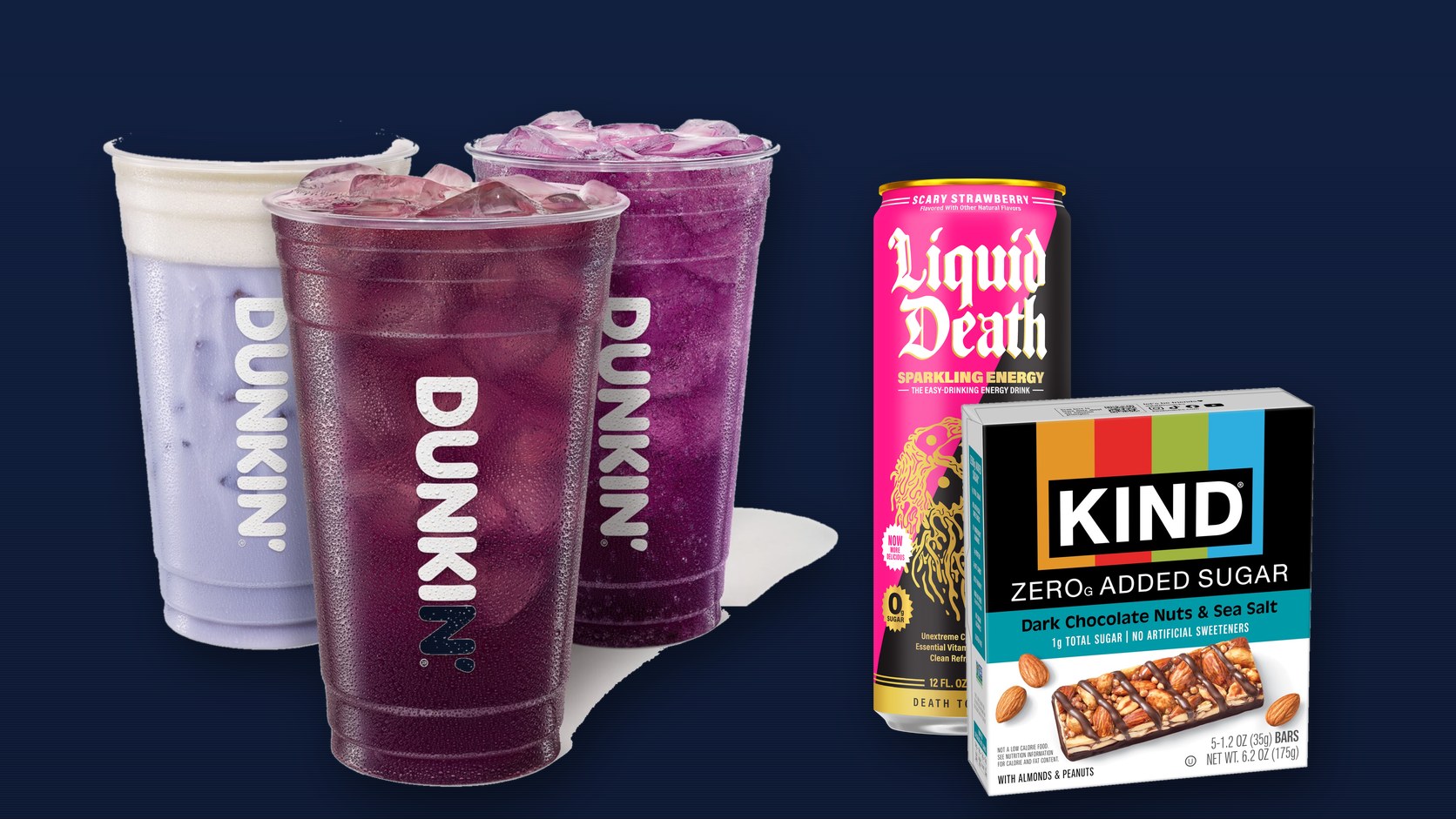
Allulose is a monosaccharide, a rearranged form of fructose that the small intestine absorbs but the body does not burn; about 70 percent leaves in the urine, which is why the FDA counts it at 0.4 calories a gram. Under the FDA's labeling definition in 21 CFR 101.9, sugars are all free monosaccharides and disaccharides, so on July 27, 2026 the Seventh Circuit held in Franco v. Chobani that allulose is a sugar and revived a "Zero Sugar" case over a yogurt with about 4 g of allulose a serving; the FDA's 2020 guidance that lets companies leave allulose out of the Total Sugars line did not change the rule. Nearly 60 similar suits have been filed since, per Bloomberg Law, including against Dunkin' Zero (about 9 g of allulose in a medium and 11 to 13 g in a large, the complaint alleges), Costco's Kirkland Signature Hydration mix (allulose the first ingredient, 7 g of carbohydrate a stick), Liquid Death's Sparkling Energy and KIND's ZEROg Added Sugar bars (about 5 g a bar, alleged). All are allegations; no class has been certified. In the only dose-escalation trial, 30 healthy adults had no severe gut symptoms until 0.4 g of allulose per kilogram of body weight in one sitting and severe diarrhea at 0.5 g per kilogram, about 28 g for a 154-pound adult by our arithmetic. Educational, not medical advice.

The cup says “0g sugar.” The ingredient list, two words in, says “allulose.” For most of 2026 those two lines lived together on Dunkin’ Zero drinks, Chobani yogurt, KIND bars, Liquid Death’s energy cans and the sugar-free hydration sticks in a Costco box, and almost nobody reading them knew they were in contradiction. Then, on July 27, a federal appeals court in Chicago read the FDA’s definition of sugar the way a chemist would, and the lawyers started filing. We read the complaints, the labels, the FDA’s paperwork and the handful of human trials that have put allulose into people and watched what their gut did with it. The law question and the body question turn out to be the same molecule.
Here is what allulose is, why nearly 60 lawsuits now say it is a sugar, how much of it the complaints say is in the things people buy, and the number nobody is printing: how much a gut can take in one sitting before it objects.
The ruling: on July 27, 2026 a federal appeals court in Chicago held that allulose is a sugar under the FDA’s own definition and let a “Zero Sugar” claim against Chobani go forward.
The wave: nearly 60 suits since, by Bloomberg Law’s count in September, now including Dunkin’, Costco’s Kirkland hydration mix, Liquid Death, KIND, Special K and CVS.
The grams: about 9 g in a medium Dunkin’ Zero and 11 to 13 g in a large, about 5 g in a KIND bar and about 4 g in a Chobani cup, all as alleged in the complaints; the labels list 0 g of sugar.
The body: about 70 percent of allulose is absorbed and leaves in the urine unburned, which is why the FDA counts it at 0.4 calories a gram.
The threshold: in the only dose-escalation trial, severe diarrhea arrived at 0.5 g per kg of body weight in one sitting; the authors set the single-dose line at 0.4 g per kg, about 28 g for a 154-pound adult (our arithmetic).
The rest of the world: Whole Foods bans it from its shelves; Europe’s food-safety agency said in 2025 it could not establish its safety after the applicant stopped answering; Australia approved it in 2024.
Sources: Franco v. Chobani (7th Cir. 2026); the complaints as reported by classaction.org, Top Class Actions and Boston.com; FDA guidance, October 2020; Iida et al., 2010; Han et al., 2018. Allegations are untested; no class has been certified. Educational, not medical advice.
The molecule: A sugar the small intestine absorbs and the body cannot burn
Allulose is a monosaccharide, a single sugar unit, the same class as glucose and fructose. It is a rearranged fructose, found in tiny amounts in figs and raisins and made at scale by running an enzyme over corn-derived fructose. It tastes like sugar, bakes like sugar and, by the FDA’s accounting, carries almost none of sugar’s calories. The reason is in a 2010 study in the journal Metabolism by Tetsuo Iida and colleagues: in 14 people given allulose at three doses, roughly 70 percent of it came back out in the urine over the next two days, and in six people measured by indirect calorimetry the absorbed share was not metabolized into energy the way glucose is. The portion that was not absorbed reached the large intestine, where the authors found it fermented poorly, in people and in 35 strains of gut bacteria. Their energy estimate for the whole molecule was under 1.6 kilojoules a gram; the FDA’s factor, set in its October 2020 guidance, is 0.4 calories a gram, against 4 for table sugar.
That is the whole appeal. A 2023 trial in Nutrients put 25 grams of allulose straight into the stomachs of 18 healthy people by tube and found blood glucose and insulin slightly lower than after plain water, with no change in blood fats, uric acid or inflammation markers. A 2026 brain-imaging study in the American Journal of Clinical Nutrition gave 30 young adults half-litre flavoured waters and found the one sweetened with allulose and stevia slowed the stomach’s emptying about as much as 25 grams of real sugar did, while only the real sugar moved glucose and insulin. The gut, in other words, treats allulose as food on the way in and as a stranger once it is absorbed.
The law: What the Seventh Circuit decided, and why it mattered to every label
The federal rule for the words “sugar free” and “zero sugar” is 21 CFR 101.60: less than half a gram of sugars per serving. The rule that defines sugars is 21 CFR 101.9, and it says sugars are “the sum of all free mono- and disaccharides (such as glucose, fructose, lactose, and sucrose).” Allulose is a monosaccharide. In October 2020 the FDA said it would not object if companies left allulose out of the Total Sugars and Added Sugars lines on the Nutrition Facts panel, “pending review of the issues in a rulemaking,” and that it would count the calories at 0.4 a gram. The guidance called itself nonbinding, and it did not touch the definition of sugars or the rule for front-of-pack claims. For six years the industry treated it as permission for the whole package.
Two Illinois consumers tested that reading on Chobani’s Zero Sugar yogurt, which they said contained about four grams of allulose a serving. A district court dismissed the case as preempted by federal law. On July 27, 2026, in Franco v. Chobani, the Seventh Circuit reversed, with the FDA itself filing a brief to say allulose falls unambiguously inside its definition of sugars. “The FDA defined a class by way of chemistry,” the opinion says, in a line quoted by Skadden; choosing not to enforce a rule, the court reasoned, is not the same as rewriting it, and a claim that mirrors the federal standard is not preempted by it. The ruling binds federal courts in Illinois, Indiana and Wisconsin, and it decided only that the case could proceed; Chobani has not been found liable, and its labels follow the FDA’s enforcement policy. But the ABA Journal reported on September 24 that nearly 60 suits had been filed in its wake, by Bloomberg Law’s count.
The FDA said it would not enforce the sugar rule against allulose. The court said that is not the same as changing the rule.
The filings: Dunkin’, Costco, Liquid Death, KIND: the labels, the grams and the complaints
Dunkin’. Dunkin’ Zero launched on March 4, 2026 as the chain’s first lightly carbonated energy drink, six flavours from Blackberry Tangerine to Blushpop, “zero sugar energy that delivers bold flavor without compromise,” in the words of its chief marketing officer, Jill Nelson, with 20 calories and 0 g of sugar in a medium. On September 30 an Illinois customer, Phyllis Wells, who told Boston.com through her complaint that she bought the drinks two or three times a week at a Chicago drive-through, filed a proposed class action in federal court in Massachusetts. The complaint says allulose is the second ingredient after water, that Dunkin’s own guide lists 6 to 12 g of total carbohydrate with 0 g of sugar, and estimates “approximately 9 grams of allulose to each medium Product and 11 to 13 grams” in a large. Dunkin’ did not respond to Boston.com’s request for comment, and has not responded to the suit in court as of this writing.
Costco. The same day, a Chicago shopper sued Costco in federal court in Seattle over the Kirkland Signature Hydration Electrolyte Drink Mix, a 40-stick box that Stack3d prices at $24.99 and reads at half a gram of sodium and 400 mg of potassium a stick. The box says SUGAR-FREE on the front, the panel says 0 g of total sugars, and an asterisk, according to Top Class Actions’ reading of the complaint, calls the allulose content negligible. Allulose is the first ingredient, and each stick carries 7 g of total carbohydrate. “The average consumer who noticed allulose on the ingredient list would be led to believe it was not a sugar,” the complaint says. We have read 12 electrolyte drinks against the WHO formula; Kirkland’s salt is in the rehydration range, and its sweetener is now the subject.
Liquid Death and KIND. The first filings came in late August. A California consumer sued Liquid Death on August 24 over Sparkling Energy cans that promise, in the brand’s own words, “100mg caffeine,” “Zero sugar” and “5 calories”; the complaint says allulose is the second ingredient and cites a 2021 survey by the International Food Information Council in which 15 percent of respondents had heard of allulose at all. On August 28 a New York consumer sued KIND over four ZEROg Added Sugar bars, alleging roughly 5 grams of allulose a bar; a second suit followed in Florida on September 9. KIND’s own page for the Dark Chocolate Nuts & Sea Salt bar lists allulose third, after almonds and peanuts, and prints 150 calories, 14 g of carbohydrate, 6 g of fibre, 1 g of total sugars and 0 g of added sugars per bar, with the footnote “Not a low-calorie food.” Special K’s Zero Added Sugar cereals, CVS’s Well Market Replenish mix, Nature’s Way gummies, Trader Joe’s candies, Conagra’s keto baking mixes and David’s protein bars have drawn their own complaints, per Keller & Heckman and Food Dive; we read David’s milkshake label in September.
Every one of these is an allegation. No class has been certified, no company has been found liable, and the labels in question follow the FDA’s stated enforcement policy. A separate suit filed against Starbucks on October 2 in Seattle is about a different sugar: it says eight “sugar-free” protein drinks carry 13 to 21 g of sugar per venti from the lactose in milk, Reuters reported; Starbucks says “the claims have no merit.” Lactose is a disaccharide, which puts it inside the same definition, and that is the only thing the two fights share.
The threshold: How much allulose a gut takes in one sitting, by the trial
The complaints argue about a word. The gut has a number. A 2018 trial in Nutrients by Han and colleagues at Kyungpook National University in South Korea took 30 healthy adults, 15 men and 15 women aged 21 to 30, and raised their single dose of allulose in steps of 0.1 g per kilogram of body weight, with a week off between steps, stopping the moment anyone reported a severe symptom. Nobody did until 0.4 g per kilogram. At 0.5 g per kilogram, severe diarrhea. Against a matching dose of ordinary sugar, allulose produced significantly more diarrhea, bloating and abdominal pain. In a second experiment the daily total was walked up over weeks; at 1.0 g per kilogram a day people reported severe nausea, abdominal pain, headache, loss of appetite and diarrhea. The authors’ suggested ceilings: 0.4 g per kilogram in a single dose and 0.9 g per kilogram across a day. The allulose came from CJ CheilJedang, the Korean food company that makes it; the funding came from Korea’s National Research Foundation.
Converted to people, that is our arithmetic: for a 132-pound adult (60 kg) the single-dose line is 24 g; at 154 pounds (70 kg) it is 28 g; at 198 pounds (90 kg) it is 36 g. The daily line for a 154-pound adult is about 63 g. Hold the complaints’ figures against it. A large Dunkin’ Zero, at the alleged 11 to 13 g, sits under half the single-dose line for the 154-pound adult; two larges in a sitting land within a few grams of it for the 132-pound one. A KIND bar at about 5 g, a Chobani cup at about 4 g and a Kirkland stick at no more than 7 g are each well under it. None of this is a serving recommendation and none of it is a measurement of any product; it is the trial’s line, drawn next to the numbers the plaintiffs allege. Liquid Death’s can does not say how many grams it holds; at the FDA’s 0.4 calories a gram, 5 calories would accommodate about a dozen, an upper bound by our arithmetic, not a label figure.
| Product | Label says | Allulose per serving (source) | Suit |
|---|---|---|---|
| Dunkin’ Zero, medium | 0 g sugar, 20 cal | about 9 g (complaint estimate) | D. Mass., Sept 30 |
| Dunkin’ Zero, large | 0 g sugar | 11 to 13 g (complaint estimate) | same |
| Kirkland Hydration stick | SUGAR-FREE, 7 g carb | up to 7 g; first ingredient (complaint) | W.D. Wash., Sept 30 |
| KIND ZEROg Added Sugar bar | 0 g added, 1 g total sugars | about 5 g (complaint) | S.D.N.Y., Aug 28; M.D. Fla., Sept 9 |
| Chobani Zero Sugar cup | Zero Sugar, 0 g total sugars | about 4 g (complaint, per the court) | 7th Cir., July 27 (revived) |
| Liquid Death Sparkling Energy | 0g Sugar, 5 cal | not stated; second ingredient (complaint) | N.D. Cal., Aug 24 |
| Trial line, one sitting | — | 24 g at 132 lb; 28 g at 154 lb; 36 g at 198 lb (0.4 g/kg, our arithmetic) | — |
All suits filed in 2026. Gram figures are the plaintiffs’ allegations or label carbohydrate, not our measurements; the companies dispute or have not answered the claims. Labels read October 15, 2026. Educational, not medical advice.
The side effects: Why a sugar the body ignores can still move the bowel
The mechanism is the one that governs every poorly absorbed sweetener, and allulose runs a milder version of it than the sugar alcohols we read in the sugar-free candy piece. Whatever the small intestine does not absorb stays in the gut as dissolved particles, and water follows particles; the colon receives more fluid than usual and a looser, faster stool is the result. Add fermentation, where bacteria turn the leftover sugar into gas, and the bloating arrives. Iida’s breath-hydrogen tests found allulose fermented less than the fibre they used as a comparison, which is consistent with it causing less gas per gram than inulin, and consistent with the trial finding that the trouble starts at tens of grams, not a few. A 2024 study in Food & Function gave young children 2.5 g and 4.3 g in 120 ml of drink and recorded no serious events and almost no loose stools. A 30-day trial published this year in 50 Chinese adults at 24 or 36 g a day recorded gut symptoms in 48 percent, mild and transient and mostly in the first three days, with all blood measures inside normal ranges; its authors proposed a daily limit of 0.4 g per kilogram for that population, lower than the Korean group’s. Dose is the variable in every study, and the dose is what the labels in the lawsuits do not state.
On the other side of the ledger, the share that reaches the colon is being studied as a feed for the bacteria there. In a 2025 paper in Beneficial Microbes, allulose and erythritol increased butyrate production and the abundance of butyrate-producing species such as Anaerostipes hadrus, in stool from six healthy adults and six with type 2 diabetes. That was an ex vivo model, not a trial in people, and its authors say so. The 2015 review in Pharmacology & Therapeutics that first laid out the metabolism found allulose enters and leaves intestinal cells through the same transporters fructose uses, GLUT5 in and GLUT2 out, and that rats clear it in urine within a day. Absorbed, unburned, excreted: a sugar that passes through.
A sugar the small intestine takes in and the body cannot burn is still a sugar on the way through the gut. The trial drew the line at 0.4 g per kilogram.
The rest of the world: Whole Foods bans it, Europe could not clear it, Australia approved it
Three other verdicts exist, none of them in court. Whole Foods Market’s ingredient standards page, which says the chain bans more than 300 ingredients from the food it sells, lists allulose among them and names it again under “other sweeteners we ban”; the page gives no reasons, so we print none. In June 2025 the European Food Safety Authority’s nutrition panel concluded that “the safety of the NF, i.e. D-allulose, cannot be established,” for a procedural reason as much as a scientific one: it had asked the applicant for more data on identity, production, use levels, genotoxicity and human studies, and “despite being contacted several times, the applicant did not reply.” Allulose is therefore not authorised as a food in the European Union. Australia and New Zealand went the other way: Food Standards Australia New Zealand approved D-allulose as a novel food on August 7, 2024, after a safety assessment that found no public-health concerns for healthy adults. The autocomplete that asks why allulose is banned in Australia has the country wrong; the European one has it right.
Facts to carry: allulose is a monosaccharide, so under the FDA’s definition in 21 CFR 101.9 it is a sugar, and a federal appeals court said so on July 27, 2026 in reviving a Zero Sugar case against Chobani; the FDA’s 2020 guidance lets companies leave it out of the Total Sugars line but did not change the rule, and nearly 60 suits have followed, including Dunkin’ Zero (about 9 g a medium, alleged), Costco’s Kirkland hydration mix (allulose first, 7 g of carbohydrate a stick), Liquid Death, KIND (about 5 g a bar, alleged) and others; about 70 percent of allulose is absorbed and excreted unburned, at 0.4 calories a gram; in the one dose-escalation trial, severe diarrhea appeared at 0.5 g per kilogram of body weight in a sitting and the authors set the line at 0.4, about 28 g for a 154-pound adult by our arithmetic. Every lawsuit figure is an allegation the companies dispute or have not yet answered. Dunkin’, Costco, Chobani, Liquid Death, KIND, the other companies named, the law firms and publications cited and the study authors had no involvement in this article. It is educational, describes what the cited documents, labels and studies say, and is not medical or legal advice.