Throne: The $10M Camera That Goes In Your Toilet
A sensor that clips inside the bowl and logs every visit automatically, built by Whoop’s former CTO. What it measures, what it costs, the question you should ask first — and why no independent evidence exists yet.
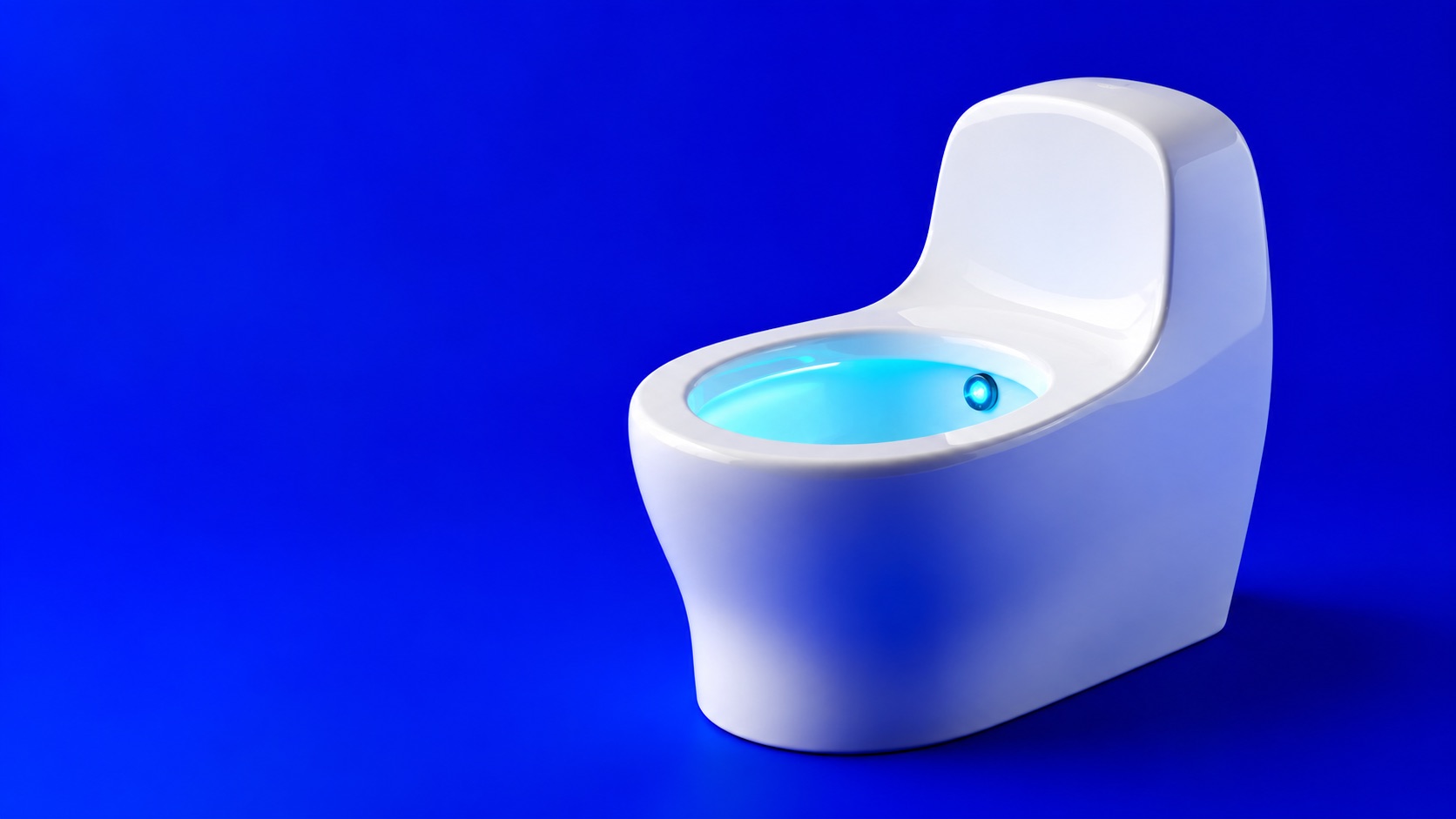
Throne is a battery-powered sensor that attaches inside a standard toilet and uses a camera with computer vision to log stool form and frequency, urine colour and volume, and timing. Throne Science was founded in 2023 by CEO Scott Hickle and John Capodilupo, formerly chief technology officer at Whoop, and raised a $10 million Series A led by Will Ventures on 28 July 2026. The device has been listed around $340 to $400 plus a subscription. No independent evaluation of its accuracy or peer-reviewed validation of its stool classification has been published.
For about a decade, the quantified-self industry has measured almost everything a body does except the one output people actually have questions about. Sleep, heart rate, glucose, steps, recovery, blood oxygen — all tracked continuously. What happens in the bathroom, which is the single most direct daily readout of digestion you have, has stayed stubbornly analogue. A company called Throne raised $10 million in July to change that, with a camera that clips inside your toilet bowl. Here is what it actually is, what it can and cannot tell you, and the questions worth asking before one goes in your bathroom.
The short version: What is Throne?
Throne is a battery-powered sensor that attaches to a standard toilet and uses a camera plus computer vision to log what happens in the bowl — stool form and frequency, urine colour and volume, and the timing of both. It is made by Throne Science, founded in 2023, and it does not replace your toilet: it clips into the one you already own.
The company announced a $10 million Series A on 28 July 2026, led by Will Ventures, with Emerson Collective, Accomplice and Moxxie among the other investors. Its co-founder is John Capodilupo, formerly chief technology officer at Whoop — which is the most useful single fact for understanding the product, because Throne is essentially the Whoop thesis pointed at the toilet: continuous passive measurement of something you would otherwise only notice when it goes wrong. The CEO is Scott Hickle. Dr Karan Rajan, a medical doctor with a very large online health following, joined as Chief of Science in December 2025.
The mechanism: How does it actually work?
A camera mounted inside the bowl photographs each use, and computer-vision models classify what they see — most importantly, sorting stool onto the Bristol scale, the seven-type shape classification clinicians already use. Because it is passive, it captures the thing self-reporting is worst at: what actually happened, every time, rather than what you remembered three days later.
That is the genuine technical argument for it, and it is not a trivial one. Bowel-habit history is one of the few areas of medicine still built almost entirely on patient recall, and recall is poor — people compress, round, and forget. A device that logs every event without being asked produces a fundamentally better dataset than a symptom diary. Whether that better dataset changes any decision is a separate question, and one nobody has answered yet.
Bowel history is one of the last corners of medicine still running on patient memory. The argument for a sensor is simply that memory is bad at this.
The cost: How much does Throne cost?
The company has listed the device in the region of $340–$400 with an ongoing subscription for the app and analysis. Pricing on hardware-plus-subscription health devices moves frequently, and the company’s own site is the only reliable place to check the current figure before buying.
Worth naming plainly: the subscription is the business model, not an add-on. As with every device in this category, you are not buying a sensor once — you are renting an ongoing interpretation of your own data, and the interpretation stops when you stop paying.
The obvious question: Is there a camera pointed at me?
No — the sensor clips to the rim and the camera faces down into the bowl, imaging waste and water rather than the person using the toilet. A camera inside the toilet bowl is still exactly what this product is, and anyone considering one should treat that as the central question rather than a footnote. The relevant things to establish before buying are where images are processed, whether they leave the device, how long anything is retained, and what happens to the data if the company is sold or folds.
That last one is not hypothetical for connected bathroom devices. This is a category where the privacy terms deserve to be read in full and the answers demanded specifically, because the data is about as intimate as consumer health data gets. We have not independently audited Throne’s data handling and are not vouching for it; we are saying the questions are the ones that matter most and the company should be made to answer them clearly.
The honest caveat: Will it actually tell you anything useful?
Unknown, and worth being upfront about. There is no published independent evaluation of Throne’s accuracy, no peer-reviewed validation of its stool classification against clinician assessment, and no trial showing that using it improves any health outcome. It is a new device from a young company, and confident claims about what it does for your health — in either direction — are not yet supported by evidence anyone can check.
There is also a useful precedent for scepticism about consumer gut testing generally. In June 2026 the US National Institute of Standards and Technology reported that at-home gut microbiome tests give varying results — different products analysing the same sample can return meaningfully different answers. Throne measures something different and considerably more concrete than microbiome composition (shape and frequency are physical facts, not sequencing inferences), which arguably makes it a more defensible measurement. But the broader lesson holds: in consumer gut tech, the marketing consistently runs ahead of the validation.
The alternatives: What else is in this category?
Three rough tiers exist. Sensor hardware: Throne, Kohler’s Dekoda, and Withings’ U-Scan, which analyses urine rather than stool. Phone-camera apps that classify a photo you take yourself — no hardware, no subscription hardware cost, and no passive capture. A notes app, which is free, and which for most people tracking a specific short-term question is genuinely sufficient.
The honest framing is that the tier you need depends entirely on the question you are asking. Working out whether a new food reliably upsets you takes two weeks of notes. Establishing a long-run baseline you would otherwise never notice drifting is the case a passive sensor actually makes. If you are simply curious what your own pattern looks like, our guide to reading stool form and the Bristol scale cover the same classification the device automates, for nothing.
The verdict: Should you buy one?
Not yet, for most people — and that is a comment on the evidence base, not on the engineering. The concept is sound, the team is credible, and passive bowel tracking is a genuinely under-measured area with a real clinical rationale behind it. What does not yet exist is any independent evidence that the device measures accurately or that using it changes anything. Early adopters who want the baseline and accept the privacy trade-off are making a reasonable bet; everyone else loses nothing by waiting for validation that someone other than the manufacturer has run.
One thing a device cannot do regardless of price: interpret a change that matters. A persistent shift in bowel habit, blood, unexplained weight loss or pain belongs in front of a clinician, and a sensor that flags it is useful only insofar as it gets you there faster. This article is educational and is not medical advice.
Correction, 18 August 2026: an earlier version of this article answered the question “is there a camera pointed at me?” with “yes.” The camera faces down into the bowl and is not pointed at the user. The section has been corrected.