The Tortilla Built for Protein Quietly Packs Nearly Half a Day’s Fiber.
Real Good Foods took its high-protein, low-carb playbook out of the freezer and into a flour tortilla this year, and it sells the bag on 10 grams of protein and 3 net carbs. The biggest number on the label sits in the third circle, 13 grams of fiber, so we read both tortillas line by line.
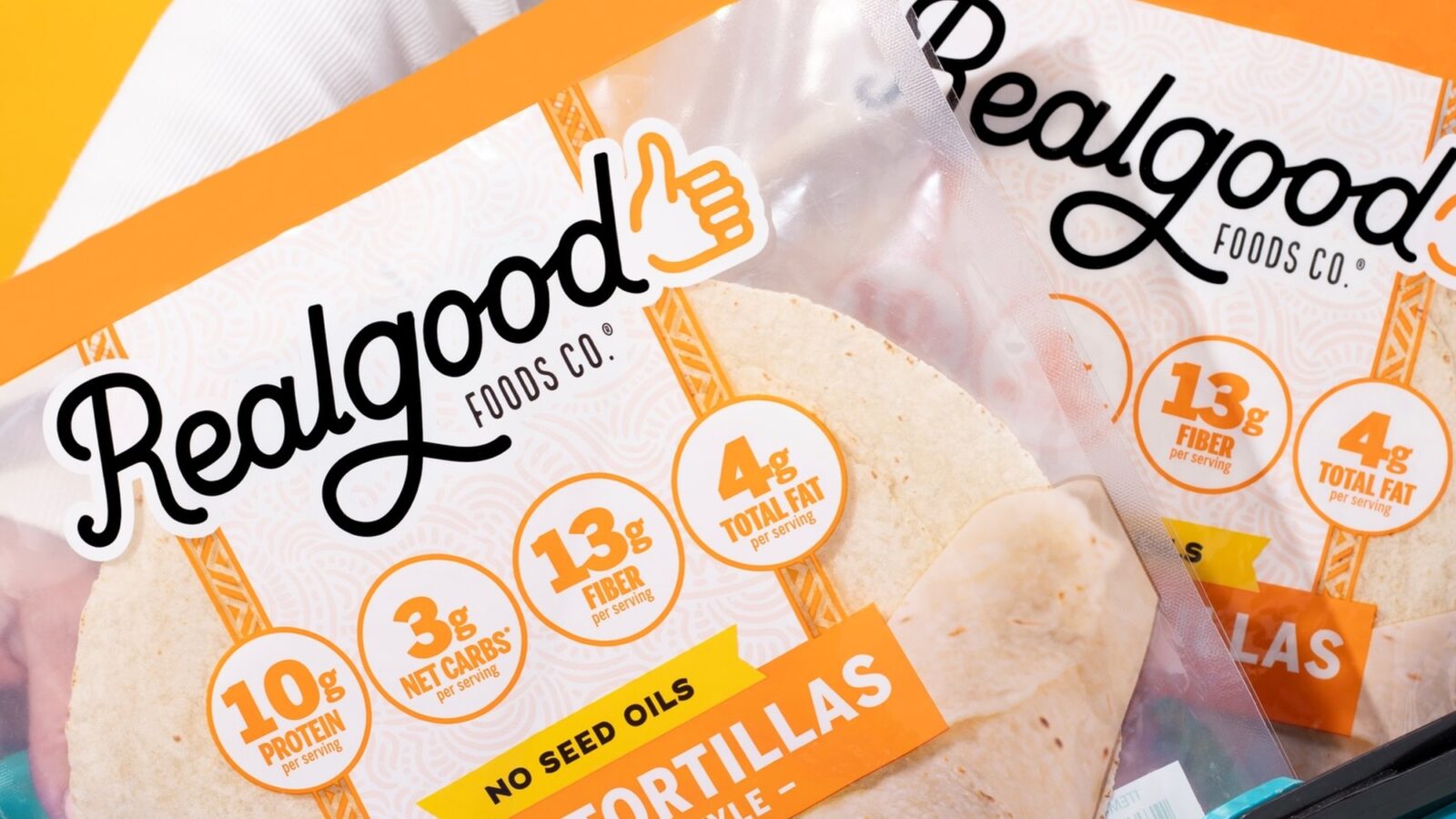
Real Good Foods’ Flour Tortillas are burrito-size flour tortillas launched in January 2026 and sold at Costco in the Southeast, with a taco-size version at Walmart. The label lists water, modified wheat starch, wheat protein isolate, beef tallow, enriched wheat flour and vital wheat gluten. One 56-gram tortilla shows 90 calories, 10 g protein, 16 g total carbohydrate, 13 g dietary fiber (46 percent of the Daily Value), 0 g sugar, 4 g fat and 390 mg sodium. The company credits its wheat protein isolate and modified wheat starch blend for the low net-carb count, and net carbs are what is left after fiber is subtracted, so by the label’s own arithmetic the fiber is the starch. A standard flour tortilla the same size carries about 2 g of fiber, per USDA figures. Educational, not medical advice.

The bag in the Costco cooler case looks like every other stack of flour tortillas, a dozen pale rounds under clear film, until the four circles on the front come into focus: 10 grams of protein, 3 net carbs, 13 grams of fiber, 4 grams of fat. Real Good Foods, the frozen-chicken company that built its name on protein and low carbs, made its first shelf-stable product this year, and it sells the tortilla the way it sells everything else, on the protein and the carbs. We turned the bag over, because the third circle is the one a label reader stops on.
Thirteen grams of fiber in a 90-calorie tortilla is 46 percent of a day’s worth, about six and a half times what a standard flour tortilla carries, and that percentage appears only on the back panel. The brand’s bullets read High Protein, Low Carb and No Seed Oils; its newest reel leads with 60 grams of protein in a breakfast burrito. This page reads the burrito-size label and the taco-size label line by line, works out where the fiber comes from using the company’s own description of its recipe, and sets the number against a plain tortilla and against the fiber most Americans actually get.
The product: burrito-size flour tortillas, 12 to a 23.7-ounce bag, launched January 22, 2026 as Real Good Foods’ first shelf-stable product and sold at Costco in the Southeast; a taco-size bag of eight is at Walmart.
The label (burrito style, per 56 g tortilla): 90 calories, 10 g protein, 16 g total carbohydrate, 13 g dietary fiber (46 percent of the Daily Value), 0 g sugar, 4 g fat of which 2 g saturated, 390 mg sodium, as read on the company’s product page on October 26, 2026.
The taco size (per two tortillas, 68 g): 110 calories, 12 g protein, 19 g carbohydrate, 16 g fiber (57 percent of the Daily Value), 0 g sugar, 5 g fat, 470 mg sodium.
The recipe: water, modified wheat starch, wheat protein isolate, beef tallow, enriched wheat flour and vital wheat gluten lead the list; the company credits “a wheat protein isolate and modified wheat starch blend along with beef tallow” for the protein and net-carb numbers.
The comparison: a standard flour tortilla carries about 3.5 g of fiber per 100 g, roughly 2 g at this size, and a whole-wheat tortilla about 5.5 g, per USDA FoodData Central; one Real Good tortilla carries about six and a half times the standard figure.
The price: $8.39 for the bag of 12 at Costco, per Stack3d’s January 2026 report.
Sources: the product pages on realgoodfoods.com; Real Good Foods’ January 22, 2026 release; Stack3d; USDA FoodData Central; the FDA Daily Value table. Educational, not medical advice.
The label: Starch first, then wheat protein, then tallow
The ingredient statement on the burrito-style label opens with water and then runs: modified wheat starch, wheat protein isolate, beef tallow, enriched wheat flour (wheat flour, niacin, reduced iron, thiamine mononitrate, riboflavin, folic acid), vital wheat gluten, mono- and diglycerides, baking powder, guar gum, salt, calcium propionate, fumaric acid, sorbic acid, enzymes and sodium metabisulfite, a sulfite. The allergen line says wheat. The taco-style label is the same list, with calcium phosphate printed where the burrito list has calcium propionate.
| On the label | Burrito style, 1 tortilla (56 g) | Taco style, 2 tortillas (68 g) |
|---|---|---|
| Calories | 90 | 110 |
| Protein | 10 g | 12 g |
| Dietary fiber | 13 g (46% of the Daily Value) | 16 g (57% DV) |
| Total carbohydrate | 16 g | 19 g |
| Net carbs, as printed on the bag | 3 g | 3 g |
| Total sugars / added sugars | 0 g / 0 g | 0 g / 0 g |
| Total fat / saturated fat | 4 g / 2 g | 5 g / 2.5 g |
| Sodium | 390 mg (17% DV) | 470 mg (20% DV) |
| Tortillas per bag | 12 | 8 |
Three things stand out. The first solid ingredient is a modified starch, not flour; in a conventional tortilla flour leads, and here enriched wheat flour is fifth. The protein is wheat protein isolate backed by vital wheat gluten, not whey, soy or pea, which makes this a wheat product through and through, and, as the company’s own page says, not gluten-free. And the fat is beef tallow, 4 grams a tortilla, 2 of them saturated, 10 percent of the Daily Value; the bag’s “no seed oils” line is accurate as labeled, because tallow is the only fat on the list.
The find: The third circle, and where the 13 grams come from
Real Good prints the fiber on the front, in the third of four circles, and that is as loud as it gets. The product page’s three bullets never mention it. Its panels read More Protein, Low Carb, No Added Sugar. The reel the brand posted on October 26 leads with 60 grams of protein and 7 net carbs in a breakfast burrito. The 46 percent lives on the Nutrition Facts panel on the back, and it is the largest Daily Value figure on the label by a distance: protein has no percentage, sodium is 17, saturated fat is 10.
Where the grams come from is written on the same page, in the company’s answer to its own question about carbs: “Our tortillas use a wheat protein isolate and modified wheat starch blend along with beef tallow, which shifts the macro profile toward more protein and fewer net carbs than a standard flour tortilla.” Net carbs are what is left after fiber is subtracted from total carbohydrate: 16 grams minus 13 grams is the 3 grams printed in the second circle. So crediting the blend for the low net-carb count is crediting it for the fiber, and by the label’s own arithmetic the fiber is the modified wheat starch. The protein isolate supplies the protein; the starch supplies the fiber.
A starch that counts as fiber sounds like a contradiction, and the rule that settles it is the FDA’s. Under the agency’s definition, an isolated or synthetic non-digestible carbohydrate counts as dietary fiber on the label only when the FDA has “determined it to have physiological effects that are beneficial to human health.” Its list of fibers it intends to add to the definition includes cross-linked phosphorylated RS4, a starch treated so that most of it passes through the small intestine undigested, and until that rulemaking is finished the agency says it will allow manufacturers to count such fibers in the dietary fiber line. The label does not say which modified wheat starch Real Good uses, and the company has not said publicly; what the 13 grams tell us, by our reading, is that it is one the FDA lets a label count.
The company’s launch release drew a line between its recipe and the low-carb tortillas that lean on added fibers and gums for their numbers, and described its own approach as led by the kitchen. On the label the work is done by a starch that counts as fiber, with one gum, guar, near the end of the list, which is what lets a tortilla read 16 grams of carbohydrate and 3 net.
“Our tortillas use a wheat protein isolate and modified wheat starch blend along with beef tallow.” Real Good Foods, answering “What makes Real Good flour tortillas lower-carb than regular tortillas?” on its product page.
The math: Thirteen grams against two
A standard flour tortilla carries about 3.5 grams of fiber per 100 grams in USDA’s FoodData Central, which is roughly 2 grams at the 56-gram size Real Good sells. A whole-wheat tortilla is listed at 9.8 grams per 100, about 5.5 grams at that size. Real Good’s 13 grams is around six and a half times the standard figure and more than twice the whole-wheat one. Against the FDA’s 28-gram Daily Value it is 46 percent, and under the federal labeling rule a food that supplies 20 percent or more of a nutrient’s Daily Value per reference amount may call itself high in it, or an excellent source; the reference amount for a tortilla is 55 grams, so by our reading one tortilla clears that bar twice over.
The reason the number lands is the gap it sits in. The Dietary Guidelines for Americans report that more than 90 percent of women and 97 percent of men fall short of the recommended intake for fiber, and list it among the dietary components of public health concern. The shortfall is lost in ordinary places, and a tortilla is one of them: the wrap around a burrito, the base of a quesadilla, the thing a taco is served in. A tortilla that lands 13 grams in that slot moves a day’s total more than most single foods can.
Two plain notes from Mayo Clinic’s fiber guidance belong next to that. It puts whole foods first, beans, whole grains, fruit and vegetables, and treats added fibers as a way to top up rather than the foundation. And it says fiber is best added slowly, over a few weeks, with plenty of water, because adding a lot at once can mean gas and bloating, which some people also report after foods with added fiber. Thirteen grams in a single tortilla is a large step for anyone whose usual day runs low; the guidance is to take it as one.
The company: From the freezer case to a shelf-stable bag
Real Good Foods built its business in the freezer aisle, on breaded chicken, enchiladas and bowls sold on protein and low carbs, and its frozen and refrigerated products are in more than 16,000 stores by the company’s count. The tortilla, announced on January 22, 2026, was its first product that does not need a freezer. In the release, Rikki Ingram, the chief marketing officer, said that expanding into shelf-stable products opens the door to new ways of using the brand in everyday meals, and the company said the tortillas would debut at select clubs in the Southeast and California. Stack3d found them at Costco at $8.39 for the bag of 12; the taco-size bag of eight followed at Walmart.
The chicken that made the company’s name carries one outside endorsement worth noting: its Lightly Breaded Chicken was named a 2025 North American Breakthrough Innovation Award winner by NIQ, the market-research firm, which judges new products on sustained sales and growth, an award the company announced in October 2025. This fall the brand has been busy at Walmart, with corn dogs in 1,800 stores since September and eight flavors of chicken meatballs backed by a sweepstakes that runs to November 8. The tortilla rides along: the October 26 reel builds a breakfast burrito from the tortillas and the meatballs, and tells its 524,000 followers to comment a code word to find the tortillas in stock nearby.
View this post on Instagram
How we checked this: Sources and method
Every figure on this page is from the ingredient statements and Nutrition Facts panels published on Real Good Foods’ product pages for the burrito-style and taco-style Flour Tortillas, read on October 26, 2026, and matched against the bag art. The launch date, the club rollout and the chief marketing officer’s remark are from the company’s January 22, 2026 release; the Costco price is Stack3d’s January report; the store count, the corn dog rollout and the sweepstakes dates are the company’s own releases and Instagram captions; the award is NIQ’s 2025 list. The standard and whole-wheat tortilla figures are USDA FoodData Central’s; the Daily Value, the fiber definition and the “excellent source” threshold are the FDA’s; the fiber shortfall is the Dietary Guidelines for Americans 2020 to 2025; the practical notes are Mayo Clinic’s. The net-carb arithmetic, the per-tortilla conversions and the reading of where the fiber comes from are ours and labeled as such. Gut Health Times has no relationship with Real Good Foods and was not sent product. This article is educational, describes what the cited sources say, and is not medical advice.