Shay Haberstroh: The Ostomy Creator Who Stopped Hiding Her Bag
As a teenager, Shay Haberstroh told no one about her ostomy bag. Ten years after sepsis left her with short bowel syndrome and a permanent ileostomy, she has named her stoma Lil Guy, makes an ostomy pumpkin most autumns and explains all of it to anyone who asks. On Ostomy Awareness Day, her story in her own words, and what the research says about the surgery behind it.
Shay Haberstroh is an American patient-creator who posts as @shayshitsinthebag about life with Crohn's disease, short bowel syndrome and a permanent ileostomy. By her own account she was diagnosed with ulcerative colitis as a teenager, had her large intestine removed and a J-pouch built, and later had the diagnosis changed to Crohn's disease. In 2016 perforations in her small intestine led to sepsis, an eight-day coma and five emergency surgeries, and she lost about half of her small intestine. She is not a doctor; her videos describe her own experience, and she is openly pro-medicine.
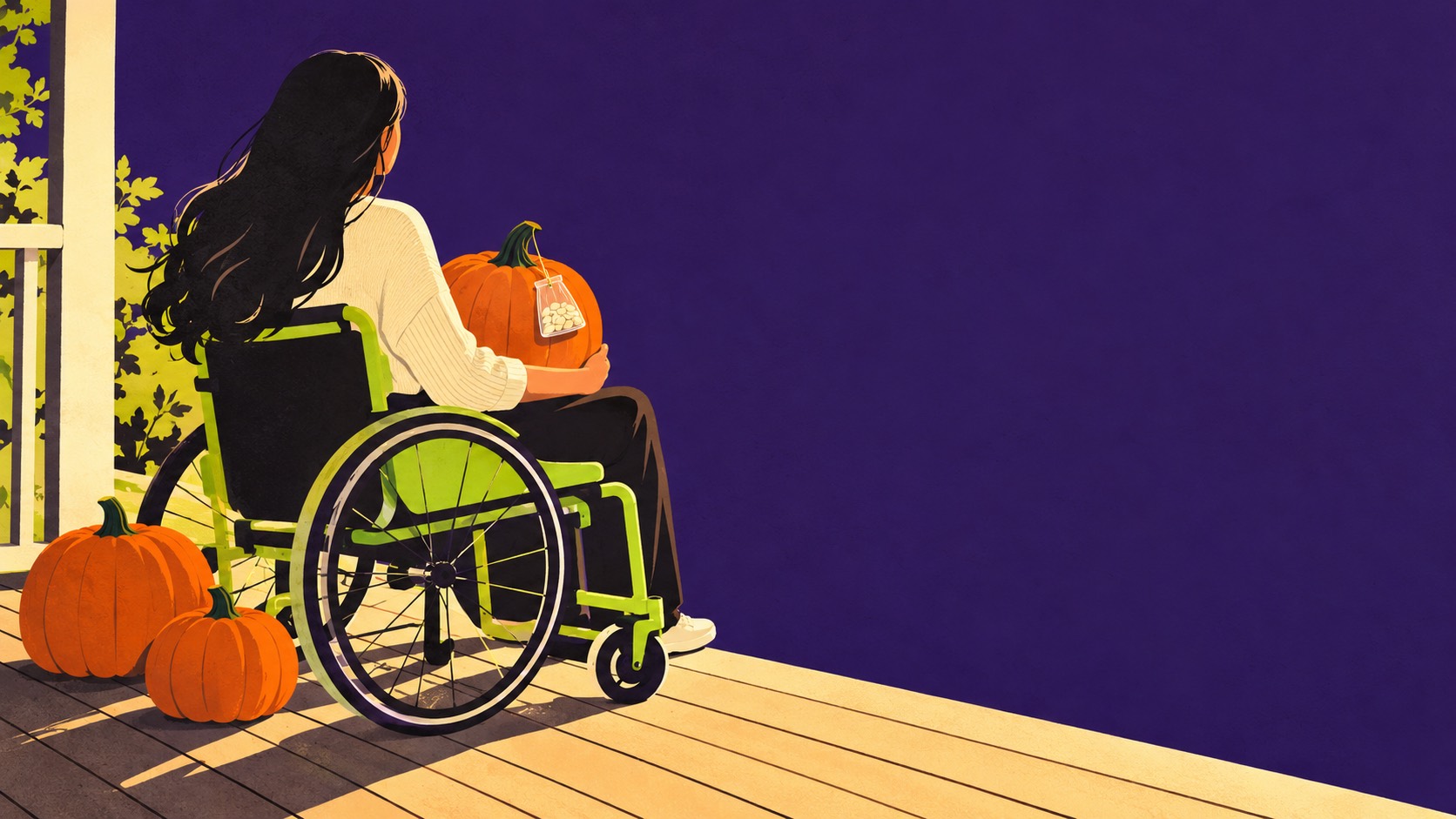
The pumpkin on Shay Haberstroh’s lap is wearing an ostomy bag. It is a clear one, never used, packed with cleaned pumpkin seeds, and it matches the one she wears herself. In the video she posted on Saturday, filmed on a sunny deck from her lime-green wheelchair, yellow captions explain what an ostomy is: a surgical opening on the abdomen, the stoma, that lets waste leave the body. Then she introduces her own. “Mine’s name is ‘Lil Guy’ because he’s just a small lil thing,” she wrote. The first Saturday in October is Ostomy Awareness Day in the United States, and Haberstroh, who posts as @shayshitsinthebag, has spent years making days like it feel ordinary. She lives with Crohn’s disease, short bowel syndrome and a permanent ileostomy, and shares all of it, jokes included, with roughly 180,000 followers on each of TikTok and Instagram. She is a patient and a creator, not a doctor or any kind of clinician.
The secret: A freshman with a bag nobody knew about
Haberstroh, who is in her late twenties and from New England, had just finished her freshman year of high school, she told the patient network Carenity in 2023, when she was diagnosed with ulcerative colitis. “I went from being a very healthy, active kid- to being told my large intestine was falling apart,” she said. Medications could not hold it. Her large intestine was removed and she was given a J-pouch, a reservoir built from the end of the small intestine and joined to the anus, with a temporary ileostomy that was reversed after about five months. The next three years, in her own video telling, were “absolute hell.”
She hid all of it. “I really thought my life would be over if anyone knew,” she told Carenity, and she told BuzzFeed in 2021 that she “told absolutely no one” about her bag. Then the diagnosis changed. Her first ileostomy, she has written, is what let doctors “find out the disease they had been treating was actually another one.” A couple of years after the J-pouch, she told Carenity, her small intestine “started to fall ill with Crohn’s disease.” Her own summary, in Saturday’s post: she has her ostomy because of “Ulcerative Colitis, and then Crohn’s, sepsis + Short Bowel Syndrome.”
The coma: Eight days in the summer of 2016
With nothing else working, she had a second ileostomy in May 2016, believing that one, too, was temporary. Within weeks she was back in the emergency room, week after week, until the visit that saved her life. Her small intestine had perforated. She developed sepsis, her organs began to fail, and she was put into a medically induced coma, during which she had five emergency surgeries. “Ten years ago my life was in the hands of doctors, and by the week mark they were entirely unsure of the outcome, and if I would even wake up on my own,” she wrote this July. “Somehow, I did on the eighth day.”
She had to learn to walk, talk and eat again, and was fed by tube and then intravenously for 100 days in all. Sepsis, organ failure and perforations in her small intestine, she wrote last year, “made me lose about half; leaving me with short bowel and a permanent ileostomy.” In May 2021 a surgeon told her she was missing too much intestine for the ileostomy ever to be reversed. “The bag’s fine,” she says at the end of her health-story video. Her health, she adds, is not.
The handle: Why she stopped hiding it
When Crohn’s reached her small intestine and a second bag looked likely, she made a different choice. “I didn’t see any representation of IBD or ostomy bags- what if I start doing it myself?” she told Carenity. She would do it “for the younger version of myself who really needed to see she wasn’t alone.” The handle belongs to that choice: a literal description of her life since 2016, when her stool began collecting in a pouch on her abdomen, and a joke that is entirely hers. Sorting through a decade of homemade bag covers this spring, she wrote that she was proud of the confidence she had built, and that “never in a million years could I even think ‘Shayshitsinthebag’ be possible.”
Her feed is a working answer to the shame she felt as a teenager: bag-change videos and plain explainers, covers cut from old T-shirts to match her crop tops, cosplay with the bag as part of the costume. Most autumns since she got the bag, she says, she has made an ostomy pumpkin, and some commenters call it gross every year, “as if this isn’t an unused bag with cleaned off pumpkin seeds in it?!” Her verdict: “nothing wrong with whimsy.” She is part of a wider push to talk about bowels without flinching, alongside creators such as Liz Roman. The Health Story Hub, a University of Iowa Libraries collection of patient stories for teaching, lists her channel as one healthcare professionals could benefit from watching.
“I just want others who go through what I go through to feel a little lighter, a little happier, and maybe a little bit more confident in what they have.”
Watch this post on TikTok
The long haul: Living with a short bowel
Short bowel syndrome is the part that shows least on camera. With no large intestine and about half her small intestine gone, she cannot absorb enough of what she eats and drinks. For nine years after the coma she relied on eating by mouth, and she has written about “the 9+ years of malnutrition and malabsorption that literally made my teeth fall out.” In 2025 she had a port placed, a long-term central line, for intravenous fluids and medications at home. She learned to access it herself, and her husband helps; as she put it in August, “we already all know Zak has my ostomy bag changes down.” “My line will be for life,” she wrote in May. By August she was keeping weight on for the first time in nine years.
The diagnoses keep coming. This spring a gastric emptying study cleared her of gastroparesis but showed the opposite problem, food leaving the stomach too fast, confirming dumping syndrome. She also lives with POTS and Ehlers-Danlos syndrome and has used a wheelchair full time for several years, and in 2025 she shared a diagnosis of stage four endometriosis, which came, as she put it, “on top of pre existing Crohn’s and short bowel and pouchitis.” Next year, she says, an operation will make her ileostomy surgically permanent.
None of it has made her suspicious of medicine. “Being anti-medication is absolutely a privilege of good health, because for some of us all we have to rely on to continue living: is medicine,” she wrote in August. She has asked commenters for “no medical advice,” and she still means to enjoy herself: “All I want in life is joy, so I’m going to get as much as I can still,” she wrote last December. Her advice to others living with chronic illness is four words long: “Find friends like you.”
What the research actually measured: Ostomies, J-pouches and a short bowel
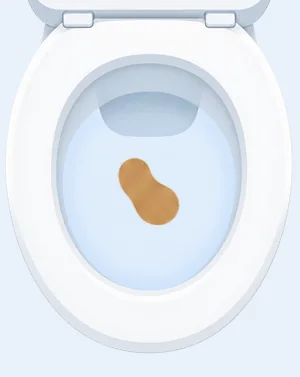
In an ileostomy, surgeons bring the ileum, the last part of the small intestine, through the abdominal wall to form a stoma, and the large intestine is removed or bypassed, the NIH’s digestive diseases institute (NIDDK) explains. A stoma has no muscle, so a pouch worn over it collects what comes out, and it can be temporary or permanent. About 100,000 people in the US have ostomy surgery of the bowel each year, NIDDK says, and the United Ostomy Associations of America estimates that 725,000 to 1,000,000 Americans live with an ostomy.
Surgery is common in Crohn’s. A 2013 meta-analysis of population-based studies found that 46.6% of people with Crohn’s had needed intestinal surgery within ten years of diagnosis, against 15.6% of people with ulcerative colitis, and that both risks had fallen over six decades; those figures cover all intestinal operations, not only ostomies. J-pouches have their own record: in a 2024 US study of 1,331 people who had one after ulcerative colitis, pouchitis (inflammation of the pouch) affected 72% within ten years, 10.3% developed Crohn’s-like disease of the pouch, and 4.1% had pouch failure requiring removal. Colorectal surgeons such as Dr. Karen Zaghiyan, also in our Inner Circle, build these pouches.
Short bowel syndrome means the small intestine is shortened or damaged and cannot absorb enough nutrients to maintain health. In adults it most often follows surgery to remove part of the small intestine, including surgery for Crohn’s disease, NIDDK notes. The resulting malabsorption can cause dehydration and malnutrition, and the main treatment is nutrition support, sometimes through an IV. Long-term short bowel syndrome is rare, because in most people the remaining intestine adapts. These are general findings, not anyone’s personal case; questions about your own bowel or nutrition belong with your care team, and our profile of Brittany Rogers, an IBD dietitian who has lived with ulcerative colitis for more than 25 years, covers how dietitians fit into that care.
The disclosure map: Where her interests sit
Haberstroh earns some income from her content, and it is worth naming plainly. She is a Hot Topic “HT Fanatic” with a storefront on the retailer’s site, and some of her posts are marked as sponsored by Hot Topic. She has said she is partnered with Bergh, a maker of wheelchair spoke guards, and she has reviewed wheelchairs a brand offered her. Her link page carries affiliate links and discount codes for mobility aids, adaptive and ostomy-friendly clothing, hydration drinks, colored contact lenses and cosplay gear, plus an affiliate link for a CBD brand, Pure Spectrum. She also has a Twitch channel. She is a patient-creator, not a doctor, nurse, dietitian or any kind of clinician. Gut Health Times has no commercial relationship with her or with any of these brands. This profile is educational, is not medical advice, and was prepared without input from her.