Heather Van Vorous: The IBS Patient Who Wrote the Cookbook She Needed
At nine, Heather Van Vorous blacked out from IBS pain in a neighbor’s carrot patch, and she says her doctor decided it was all in her head. She refused to accept a lifetime of bland food, wrote <em>Eating for IBS</em>, and has spent nearly three decades explaining IBS to people who were dismissed the way she was.
Heather Van Vorous is an American IBS patient-expert and author, not a clinician, who has had irritable bowel syndrome since age nine. She wrote Eating for IBS (2000), a 175-recipe diet guide and cookbook that her awards page lists as a 2001 IACP cookbook award finalist, and The First Year: IBS (2001), and she founded the patient site HelpForIBS.com, which grew out of an email letter she began sending in 1997. Her approach builds low-fat meals around soluble fiber while avoiding common trigger foods, and her site says IBS has no cure yet, can be managed, and must be diagnosed by a physician. She is also founder and CEO of Heather's Tummy Care, which sells acacia fiber, peppermint oil capsules and teas.

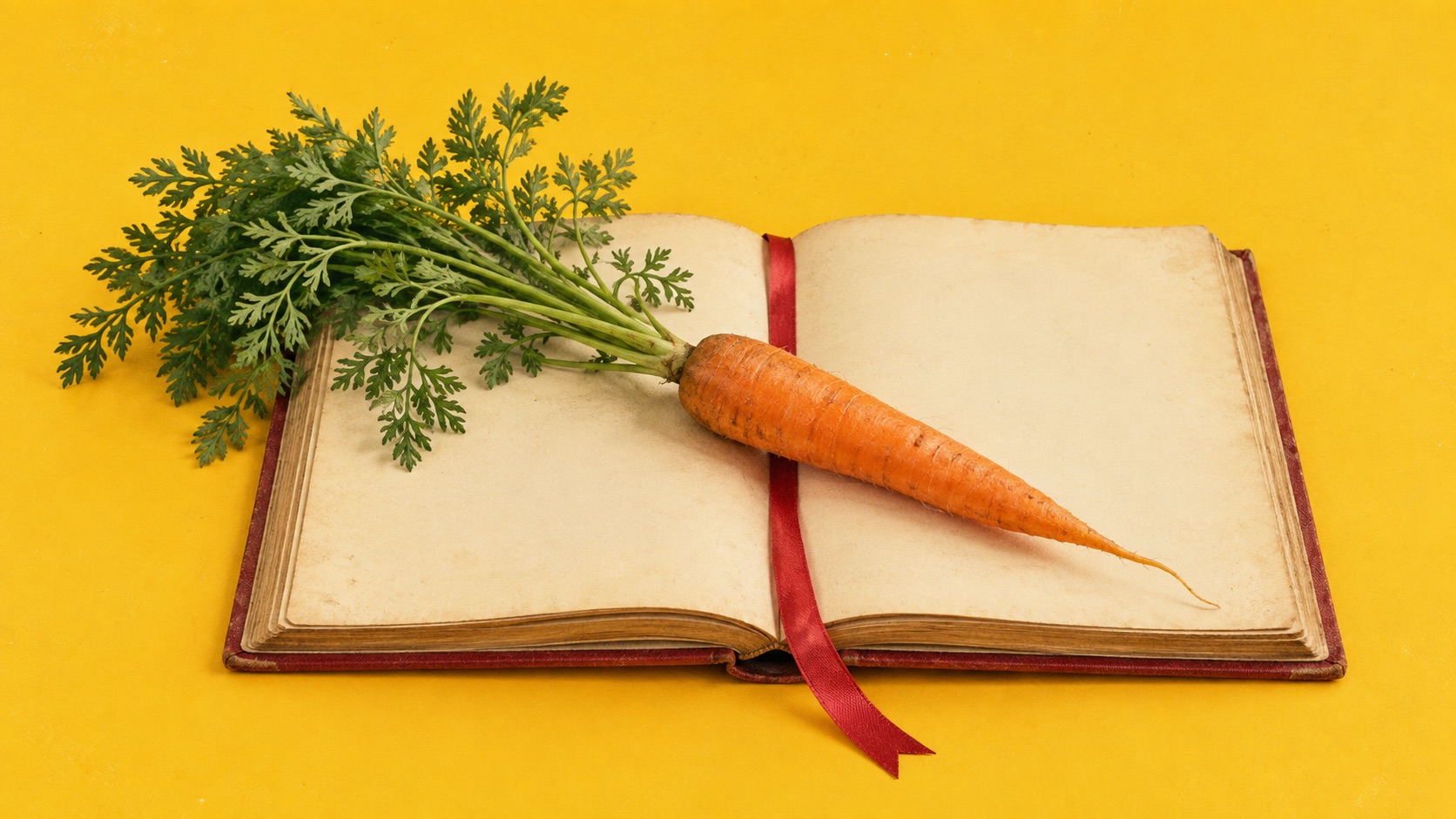
Heather Van Vorous was nine, playing in a neighbor’s garden on a sunny day during summer vacation, when the pain hit. She could not move, could not breathe, could not even whisper for help. “The whole world went gray,” she writes. “I woke up face down in a carrot patch.” It was her first attack of irritable bowel syndrome, though it would be years before anyone gave it the right name. She went on to write Eating for IBS, to found the patient site HelpForIBS.com, and to spend nearly three decades explaining IBS to people who, like her, were often told it was all in their heads. She is a patient-expert and an author, not a doctor or a dietitian. She is also, before anything else, someone who really loves to eat.
The carrot patchYears of being told it was nothing
Her parents took her to her pediatrician. As Van Vorous tells it, the doctor ran no tests, said the symptoms did not fit any disorder she knew of, told the fourth-grader to quit complaining and decided the problem was in her head. Van Vorous says she was so humiliated that she did not raise it with another doctor for six years. At fifteen, a different doctor, one she remembers as genuinely nice, diagnosed diverticulosis without running a single test, prescribed an antispasmodic and recommended “fiber.” “Sound familiar to you?” she asks her readers. The correct diagnosis came only years later, when she was an adult and a doctor finally ran the tests that rule out look-alikes such as inflammatory bowel disease and celiac disease.
The years in between will sound familiar to a lot of people with IBS: missed school days, holiday dinners spent in the bathroom, camping trips spent in an outhouse, pizza parties and sleepovers skipped out of fear. Her first date with the man she would later marry ended, she writes, with him carrying her out of a restaurant bathroom where she had been stuck for an hour, while he wondered whether she had stood him up.
The kitchenA food lover’s refusal
What happened next is the reason people know her name. Van Vorous had learned to cook as a child at her grandmother’s side (“Grams was a fantastic cook and I grew up in her kitchen”), and she was not about to trade that for a lifetime of bland food. “I refused to view my IBS diet as a prison sentence,” she writes. “I had to eat safely for IBS but by God that would not mean limited, boring or bland.”
So she treated her trigger foods as a cooking problem. Oat or soy milk went into her grandmother’s creamy recipes in place of dairy; an extra egg white stood in for a yolk. The biggest lightbulb was learning that fiber comes in two kinds, soluble and insoluble, which finally explained why her “smushy safe foods” behaved so differently from her “roughage danger foods.” (Our guide to soluble and insoluble fiber covers the difference.) The recipes she worked out over the years filled, in her words, “a long shelf of notebooks in my kitchen.” Her rule for all of it: “food is fun, cooking is a pleasure, and eating a delicious meal is the wonderful end reward.”
“I refused to view my IBS diet as a prison sentence.”
The emailFrom a one-page letter to the cookbook
For a long time she assumed she was the only person in the world with IBS. Then she found online IBS message boards and was shaken by what she read: people treated dismissively by their doctors, given no real help, and desperate for it. In 1997, by her account, she started typing up her diet notes and emailing them to anyone who asked. “What began as that one page email grew to over 200 pages and started crashing mail servers,” she writes. “So I turned it into a website and now I could just send people a link.” That website is HelpForIBS.com, whose copyright line begins in 1999. Before the letter became a book, she checked her information in medical libraries and read every other IBS book she could find. One, she admits, made her so angry that she threw it across the room.
Eating for IBS came out in 2000: a diet guide plus 175 recipes, from homestyle and international dishes to desserts and party food, written so that people with IBS would not have to cook separate meals while their families ate normally. Van Vorous describes it as the first book on IBS written by someone who has it. According to her awards page, the International Association of Culinary Professionals named it one of three finalists in the Health and Special Diet category of its 2001 Julia Child cookbook awards, and Library Journal ranked it 17th on its cookbook bestseller list for 2000. A second book, The First Year: IBS (2001), walks newly diagnosed readers through their first week, their first month and the rest of their first year.
The messageReal, physical and manageable
She took the same idea to television. Heather Cooks!, a cooking show she hosted that originally aired on Seattle television, per her site, made IBS-friendly versions of dishes that are usually full of trigger foods: blueberry pecan French toast, club sandwiches, garden veggie nachos. She has also written an IBS newsletter, mostly every day by her count, since 2002, and it still reads like a cook wrote it. Her end-of-summer cherry almond cake this September opens with “Oh my mmmmm…” and tells readers to use whichever ripe fruit is “the easiest on your gut.” She signs off, as she signs off almost everything, with “You are not alone.”
Underneath the recipes is a message she has repeated for nearly thirty years. IBS is real and physical. “IBS is not a mental problem, and it’s not just from stress,” she writes, and people who have it still struggle to get “their own family, friends, employers, and doctors to acknowledge they have a real physical problem.” But she does not sell her kitchen as a cure. “IBS cannot be self-diagnosed,” Help for IBS tells readers, because other disorders can mimic it and have to be ruled out with clinical tests, preferably by a board-certified gastroenterologist. “While there is no cure yet,” the site goes on, there are many ways to manage the symptoms. It keeps a section on prescription IBS medications and tells readers to “work in partnership with your doctor” to find the right one. For someone whose first experience of medicine went the way hers did, that is a generous position, and a responsible one. It is the same honesty that runs through our profile of Erin Judge, a dietitian who has also had IBS since childhood.
What the research actually measuredSoluble fiber and peppermint oil
Two ingredients run through Van Vorous’s diet and her product line, soluble fiber and peppermint oil, and both have been studied, at modest scale. The American College of Gastroenterology’s 2021 IBS guideline suggests soluble, but not insoluble, fiber for overall IBS symptoms, a strong recommendation based on moderate-quality evidence. Behind it is a 2014 meta-analysis of 14 trials and 906 people: soluble fiber, the kind in psyllium, oat bran, barley and beans, helped, with about one extra person improving for every seven treated, while bran did not. Peppermint oil gets a weaker, conditional suggestion from the same guideline, on low-quality evidence, as the NIH’s complementary health center summarizes. A 2019 meta-analysis of 12 trials and 835 people found peppermint oil more than doubled the chance of overall improvement compared with placebo, but a 2020 trial of 190 people in the Netherlands found no significant difference on its main pain measure, though one version of the capsule did improve pain and severity scores. These are findings about ingredients, not endorsements of any product, hers included. Talk to your own clinician before starting a supplement; our bloating guide covers the common triggers, and the signs worth raising with a doctor.
The disclosure mapWhere her interests sit
Van Vorous earns her living from IBS, and she is upfront about it. She is founder and CEO of Heather’s Tummy Care, a company outside Seattle whose chief operating officer is her husband, William. It sells acacia fiber, enteric-coated peppermint oil capsules and teas alongside her books, and she offers paid one-to-one IBS coaching and a paid tier of her newsletter. Novartis once licensed recipes from Eating for IBS for an IBS website, according to her awards page. She is a patient-expert and author; she is not a physician, a dietitian or a licensed clinician. Gut Health Times has no commercial relationship with her or her company. This profile is educational, is not medical advice, and was prepared without input from her. Anyone with ongoing digestive symptoms should start with their own doctor, since other conditions can look like IBS.