What Ozempic Does to Your Gut
The drugs everyone is talking about do measurable things to digestion — and early, tangled things to the microbiome. What is known, what is not, and why the confident takes are ahead of the science.
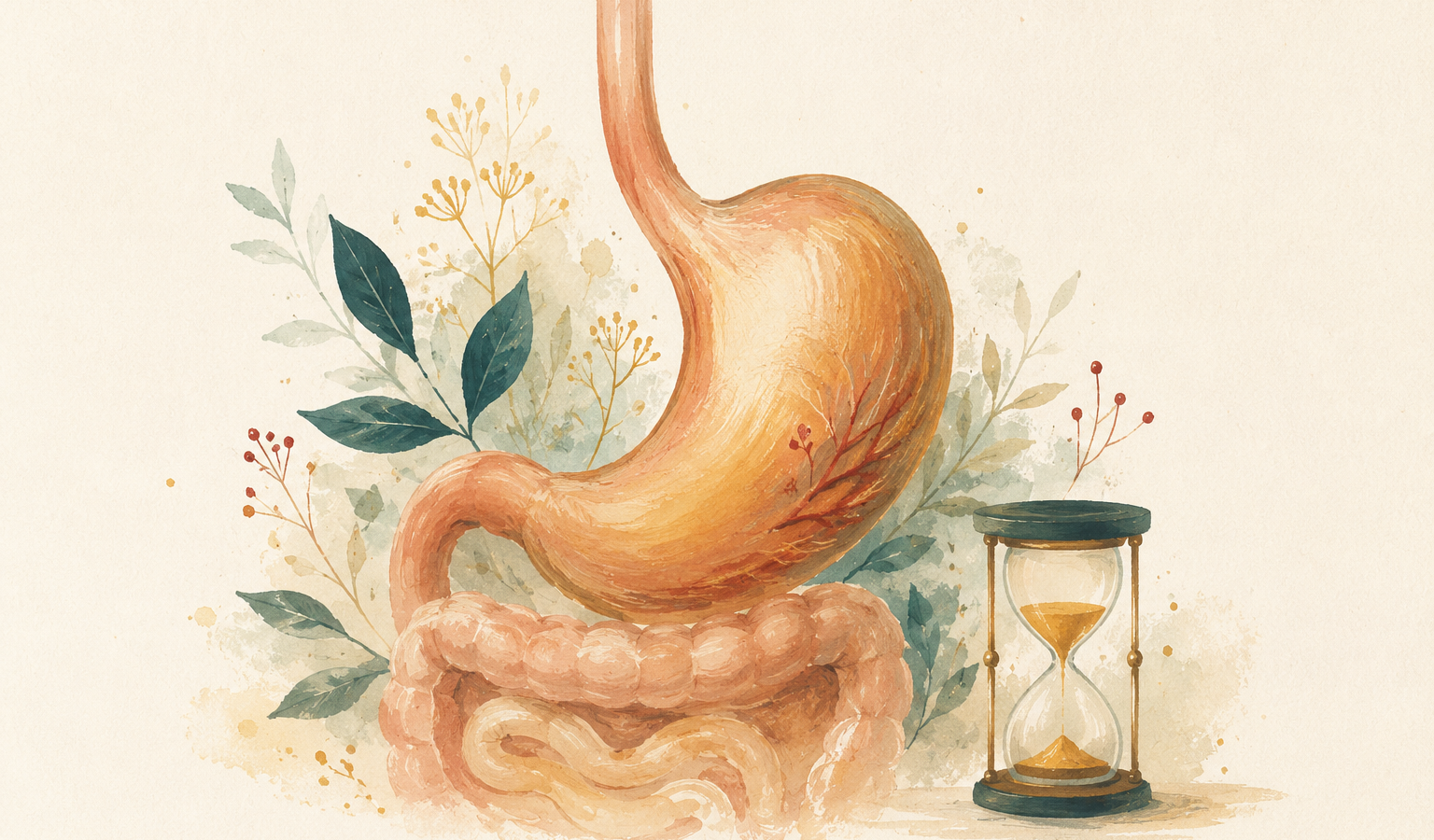
GLP-1 drugs like Ozempic slow how fast the stomach empties, causing common GI side effects in 40 to 70 percent of people, and early studies show microbiome shifts such as more Akkermansia. But researchers cannot yet separate the drug effect from eating less and losing weight. Educational, not medical advice.
Part of our tracker: GLP-1 & the gut →
No class of drugs has dominated the health conversation like the GLP-1s — Ozempic, Wegovy and their relatives. Most of the noise is about weight. But these drugs also do specific, measurable things to the gut, and alongside the real effects a second layer has grown online: confident claims that Ozempic is either healing or wrecking your microbiome. The honest version of the story is more interesting, and more cautious, than either take.
The clearest effect: They slow the stomach down
Start with what is not in dispute. GLP-1 drugs slow how fast the stomach empties, so food sits longer — and that single mechanism explains most of what people feel. As the Cleveland Clinic lays out, delayed emptying drives nausea, early fullness, bloating, heartburn, and either constipation or diarrhea. A 2025 review in Mayo Clinic Proceedings put the share of patients with gastrointestinal side effects at roughly 40 to 70 percent. The drugs work on two fronts at once — slowing the gut and acting on nausea centres in the brain — which is why the queasiness is so common, and why it usually eases over the first weeks at each dose as the body adapts.
The stomach-slowing is real and well documented. The microbiome story is real too — but far blurrier.
The microbiome shifts: A real signal, a tangled cause
Then there is the part the internet loves: the microbiome. Early studies do find shifts. A 2025 systematic review in Nutrients reported that Akkermansia — a bacterium tied to a healthy gut barrier — rose consistently across GLP-1 drugs, and a small semaglutide study saw beneficial Bifidobacterium increase while a potentially harmful genus fell. On the surface, that reads like good news for the microbiome. Look closer and it gets complicated fast.
Why the confident takes are ahead of the science: Correlation, meet confounding
Here is the crux, and it is the line missing from most viral explainers. People on these drugs are not holding everything else constant: they eat less, they lose weight, they often change what they eat, and many take other medications like metformin. So when the microbiome shifts, researchers genuinely cannot yet say whether the drug reshaped it or whether the eating-less-and-losing-weight did. The reviews are blunt about this — the changes “may represent secondary effects of metabolic improvement rather than primary therapeutic mechanisms,” and confounders are “frequently unaccounted for.” Most studies found no significant change in overall microbiome diversity at all, and the headline studies are small (one widely shared result rested on just 15 people). A real signal, in other words, wrapped in too many variables to call.
Living with the gut side effects: The practical part
For the day-to-day discomfort, the Cleveland Clinic’s guidance is unglamorous and sensible: smaller meals, steady hydration, and going easy on high-fat and high-sugar foods, which sit heaviest in a slowed stomach. Low fibre can tip things toward constipation, so the usual gentle, gradual fibre advice applies here too. For most people the sharpest symptoms fade as the dose stabilises.
When it is more than an adjustment: The red flags
Two things matter most here. First, these are prescription drugs, started and dose-escalated only with a clinician — nothing on this page is a reason to start, stop, or change one on your own. Second, know the line between expected and urgent. Transient nausea, fullness, burping, bloating and altered bowel habits are common and usually manageable. But persistent or severe vomiting, an inability to keep fluids down, or signs of dehydration warrant prompt medical attention, as can symptoms of a badly slowed stomach. Severe or persistent abdominal pain — especially pain radiating to the back, or high on the right — is a reason to be seen urgently, not to wait. And anyone heading into surgery or anaesthesia should tell their care team they are on a GLP-1. This is educational, not medical advice; the drug is your doctor’s call, and so is any symptom that worries you.
The truthful summary is the least viral one. Ozempic clearly slows the gut and commonly upsets it for a while; it also nudges the microbiome in ways that look, tentatively, benign. What no one can honestly claim yet is that the drug is the reason — and until the science can separate the medicine from the weight loss, the confident gut takes are running ahead of what we actually know.