Why Everyone Is Fermenting Again (and What Actually Helps)
Fermentation just went from wellness fad to federal policy — and unlike most viral gut trends, this one has a serious Stanford trial underneath it.
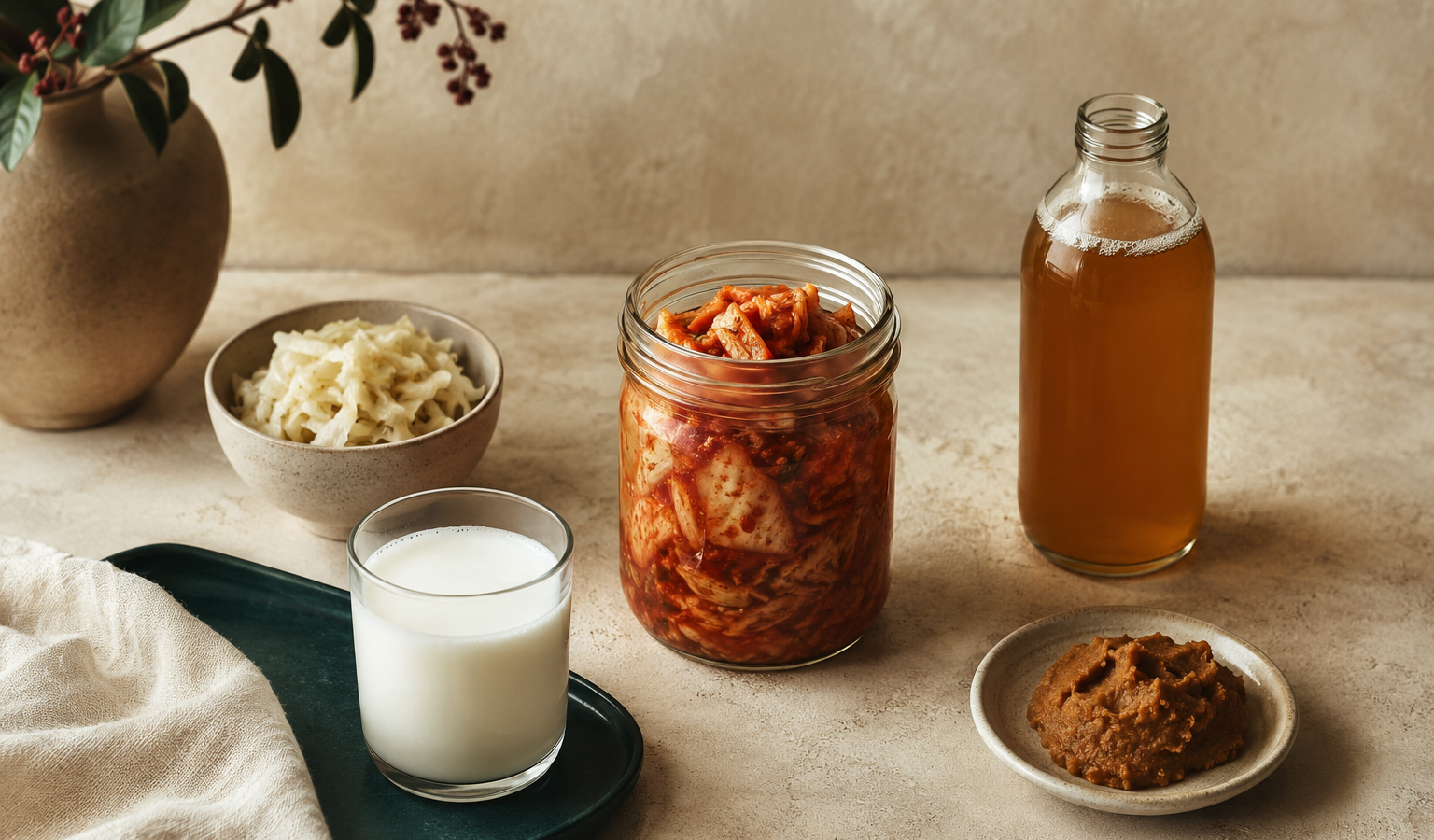
Fermented foods are the rare gut trend with strong evidence. A Stanford trial found a high-fermented-food diet raised microbiome diversity and lowered inflammation, where a high-fibre diet did not. Choose live-culture foods like kefir, kimchi and sauerkraut, and vary them.

Fermentation has been around for millennia, but this summer it crossed a line it never had before: from wellness fad to federal policy. The latest U.S. dietary guidelines are the first to name gut health and the microbiome outright, and they explicitly encourage foods like kefir, kimchi and sauerkraut. By July, as the Associated Press reported, that endorsement had set off a fresh wave of interest in a very old practice. For once, the hype has a serious study underneath it.
The evidence that matters: A Stanford trial, not a TikTok
Most viral gut advice rests on vibes. This one rests on a striking piece of research. In a 10-week Stanford trial published in Cell, 36 healthy adults were split between a high-fibre diet and a high-fermented-food diet — yogurt, kefir, kimchi, sauerkraut, kombucha and other brined vegetables. The fermented-food group saw their gut microbial diversity increase, with bigger effects at larger servings, and levels of 19 inflammatory proteins fall. The high-fibre group, notably, showed no rise in diversity over the same window. That is the rare result that surprises even researchers: for boosting microbial diversity, the ferments outperformed the fibre.
In a controlled trial, fermented foods raised gut diversity and lowered inflammation — where a high-fibre diet, over the same weeks, did not.
What actually counts: Live cultures, varied and regular
The useful takeaways are simple. Reach for foods with live, active cultures — kefir, live yogurt, kimchi, sauerkraut (the refrigerated, unpasteurised kind), miso, tempeh, kombucha — and vary them rather than leaning on a single jar. Stanford’s research dietitian has suggested aiming for around two servings a day. One important caveat, stressed in a 2026 Nature Reviews Microbiology review: a label reading “contains live and active cultures” is not the same as a proven probiotic, which by definition requires identified strains shown to do something. Fermented foods are worth eating for the whole package they deliver, not a single miracle microbe.
The caveats: Not for everyone, and not all equal
A few groups should approach with care, per the clinical literature (Advances in Nutrition, 2025). Fermentation raises histamine, so people with histamine intolerance — and anyone on certain antidepressants (MAOIs) or managing Crohn’s — may react with headaches or GI upset. Many fermented vegetables are salty (miso especially), which matters if you are watching blood pressure. People who are immunocompromised should avoid raw, unpasteurised ferments to lower foodborne-illness risk. And for IBS or SIBO, effects vary — some ferments help, some aggravate — so introduce them slowly and notice what your gut says.
The verdict: A rare fad worth the hype
Amid a summer of gut-health noise, fermented foods are the unusual case where the trend and the evidence point the same way. Add them gradually, keep them varied, pair them with the fibre that feeds the bacteria they deliver, and treat any of the cautions above as a reason to check with a clinician first. If persistent digestive symptoms are what sent you looking for a fix, a jar of kimchi is a fine habit but not a diagnosis — see a doctor for anything that lingers. This is educational, not medical advice.