Celiac Disease Found Gabby Hemond in Lockdown. She Went Looking for Her People.
In April 2020, in the first weeks of lockdown and the last weeks of college, a blood test told Gabby Hemond why an apple had made her sick: celiac disease, which her older sister already had. She opened a TikTok account the next January to find anyone who understood; this holiday she is co-hosting a gluten-free gift exchange that pairs strangers across borders, and a documentary she appears in began streaming on October 8. She is a patient and a creator, not a clinician; this is her story in her own words, with the research beside it.
Gabby Hemond is an American creator who posts as no gluten gabby about living with celiac disease, to 154,558 followers on TikTok and about 84,600 on Instagram when we read her profiles on October 19, 2026. By her own account she was diagnosed by blood test at the beginning of April 2020, at 22, during her college finals and the first lockdown, after her older sister, diagnosed a few years earlier, told her to get tested; pandemic delays meant her endoscopy came in January 2021, the month she opened her TikTok account. She co-hosts the third annual Gluten Free Gift Exchange with Liz Purvis of Yeet That Wheat, with sign-ups closing November 1, 2026; hosts the Celiac Disease Foundation's monthly Celiac Teen Talk for teens aged 13 to 17; is listed among the influencers and advocates of the documentary Gluten is a Joke, streaming since October 8, 2026; and is on the agenda of the FAACT Allergy Summit on October 22 to 24, 2026 in Oak Brook, Illinois. She is a patient and a creator, not a doctor or a dietitian.
The fruit salad gave it away. In the first days of April 2020, with her college finals moved online and, in her words, “COVID, everything shut down,” Gabby Hemond had spent two weeks feeling awful. Then she cut up an apple. “Within 30 minutes, 45 minutes, I got food poisoning like symptoms,” she told the podcast Don’t Feed the Fear in September 2025. “All I ate today was fruit.” She texted her older sister, who had been diagnosed with celiac disease a few years earlier. “She’s like, you gotta get tested.” A blood test the next day “immediately came back positive.” She was 22. Hemond now posts as no gluten gabby to 154,558 followers on TikTok and about 84,600 on Instagram, counts we read on October 19, 2026. She is a patient and a creator, not a doctor or a dietitian.
The moment is a crowded one. Sign-ups for the Gluten Free Gift Exchange, a holiday swap she is co-hosting this year with Liz Purvis of Yeet That Wheat, close on Sunday, November 1. Gluten is a Joke, a documentary that lists her among its influencers and advocates, has been streaming since October 8. And from October 22 to 24 she is on the agenda of the FAACT Allergy Summit in Oak Brook, Illinois, for a session on making graphics and video. Behind all of it sits a number from the National Institute of Diabetes and Digestive and Kidney Diseases: experts estimate about 2 million people in the United States have celiac disease, and many have not been diagnosed. In the only national blood survey, 29 of the 35 people found to have it did not know. Her story is what one of those people looks like from the inside, in the one year nobody could get an appointment.
The diagnosis: Positive in April, confirmed the following January
She tells it in order on the podcast. Growing up she “had a lot of weird symptoms” she only recognised later; “we have autoimmune on my family’s side, but nothing about celiac.” The positive test came with a caveat. “They’re like, oh, it could be a false positive, let’s get you to a GI, get an endoscopy.” The pandemic had pushed appointments out by most of a year. “Blood work was diagnosed beginning of April and I didn’t have my actual endoscopy until January, 2021. So it was about nine or 10 months.” She went gluten-free at once, “my numbers were way too high for that to be a false positive,” and then learned the rule she had broken: “I didn’t know that I wasn’t supposed to do that when I had my endoscopy, ’cause I had to eat gluten again for two weeks right before.” She did not eat out in 2020. “I think maybe I ordered Chipotle once.”
Her sister’s head start turned the disease into a shared project. “It was like my lifelong disease is now this activity that we get to learn about. So it became very fun.” The line she keeps returning to is the one about timing: “Well, at least I got to eat everything I wanted for a little bit.” On October 15 she posted the same thought as an Instagram carousel: “at least I had 22 years of the experience, right? I am glad I experienced all the food for so long, but I always wonder how my body would feel if…” A pinned post from April 2025 puts it shorter: “To be fair, I didn’t want to be gluten-free but my genetics made me.”
“I was so desperate for any community or communication or anything at that point. And so I just started writing.”
The account: A dancing app, used as a vent, and the comments that built it
“I just wanted to talk to somebody who either has it, understands the disease, anything,” she said of the months after the blood test. The posts she found online were years old. Her plan was “a 2008 blog style”; her friends told her to get on TikTok. Her profile data shows the account created on Sunday, January 24, 2021, the month of the endoscopy. “Once I was finally diagnosed in January, 2021, that’s when I started my account.” She had used the app for the dancing. “I’m not gonna come on this app and start being very depressing about my disease. That’s just not who I am.” The early videos were small: “oh, I didn’t know this wasn’t gluten-free, or this is a meal that I randomly made. And looking back at those videos, I’m like, that’s so disgusting. I’ve grown a lot.” The comments did the rest. “So many people started commenting and asking questions of like, what is celiac? That’s what took my platform off.”
She corrects herself in public, which is rarer than it sounds. She once believed “digestive enzymes were safe for me to take. I mean, they’re safe to take, but they’re not actually healing my celiac disease. That’s what I genuinely thought.” Her bios are plain: “just a gluten free girl sharing about celiac disease” on TikTok, “a page to remember all the good gluten free eats” on Instagram. Her best-known explainer is the raw chicken theory, posted in May 2025 for people with no food allergies: “Like you wouldn’t eat something after knowing someone laid raw chicken on top of it, so why would I do that with a food I’m allergic to?” Celiac disease is not a classic allergy, the NIDDK calls it “a chronic digestive and immune disorder,” but the practical rule is the same.
The gift exchange: Third year for Liz, first year with a co-host
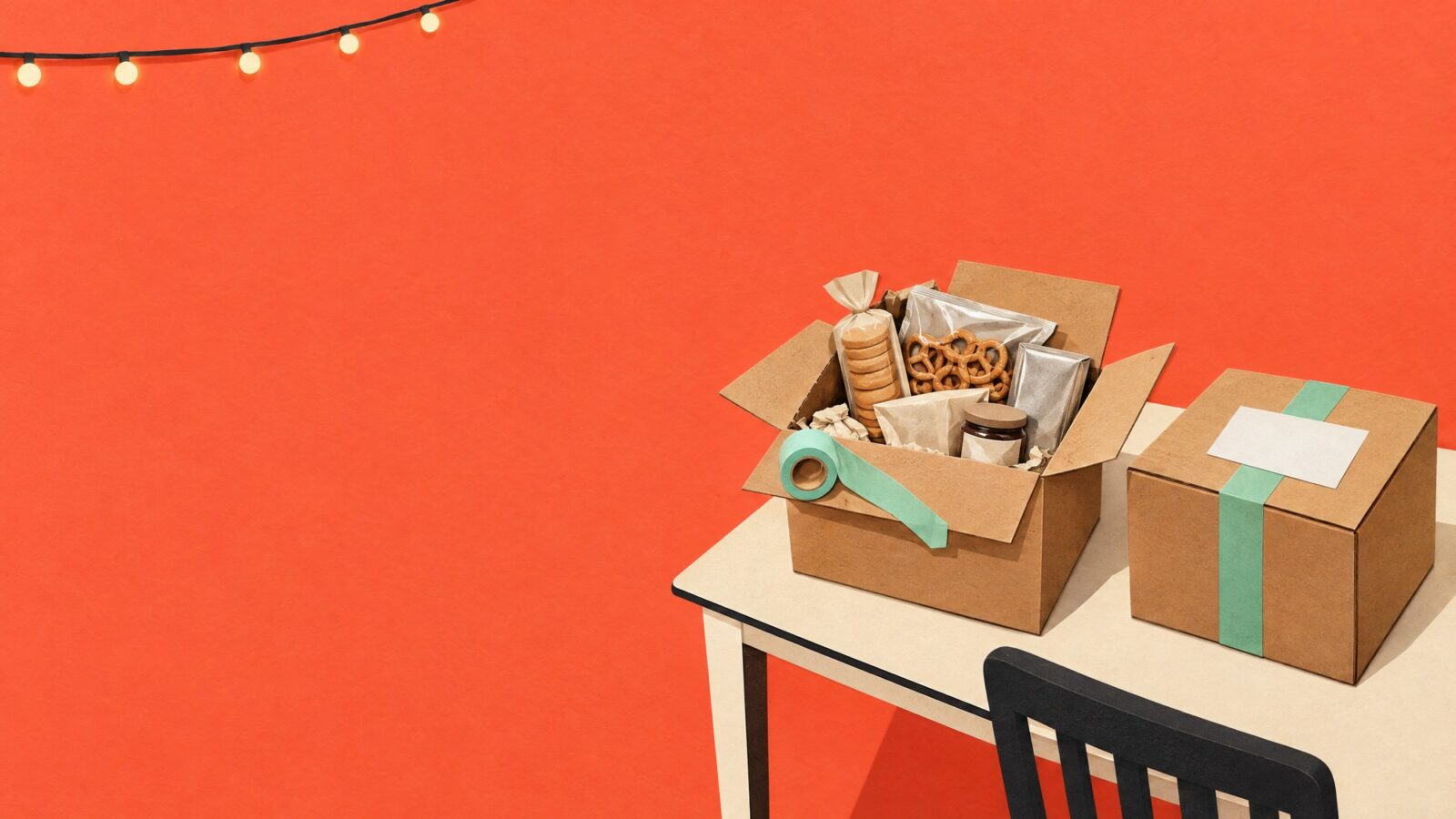
On October 3 she answered a commenter: “Very excited to work with Liz on her annual gift exchange! Stay tuned, we will be sharing once the form is live on October 12th!” The sign-up form, linked from both their bios, opens: “Welcome to the 3rd annual Gluten Free Gift Exchange! This is a fun opportunity to connect with the GF community through a holiday gift exchange.” The deadline is Sunday, November 1, 2026, at 11:59 pm Pacific. Her own pitch, posted October 16: “What better way to celebrate the holidays than getting paired with another gluten-free friend and sending each other some of your favorite gluten-free goodies?!” It is international, “so you could be paired with someone from anywhere in the world,” and the matching is by hand: “Liz and I will be connecting you as best we can with others who share similar dietary restrictions.”
The rules document is the part worth reading. The exchange is open to “anyone who is a part of the Gluten Free Community,” with celiac disease, gluten intolerance or another condition that requires the diet, and it asks everyone else to sit out: “This is a space for GF folks, many of whom are not GF by choice.” Gifts are capped at US$30 before shipping, “the maximum, not a target,” matches go out by email two to three weeks after the deadline, international parcels must ship with tracking by December 2 and domestic ones by December 9, and there is a quiet sponsorship route for anyone for whom even $30 “may financially be a challenge.” Purvis, who posts as Yeet That Wheat to about 12,800 Instagram followers, ran the first two years alone.
Watch this post on TikTok
The documentary and the teens: A red carpet in Florida, a monthly call, a summit
Gluten is a Joke, written and directed by Robin Hofmann, lists six influencers and advocates on its site, and “Gabby Hemond @NoGlutenGabby” is the third name; Purvis is the fifth. The film’s own premiere page says the red carpet rolled out on September 12, 2026, at the Ritz Theater in Sanford, Florida, to more than 400 people; its Plex listing gives a release date of October 8, 2026 and a running time of an hour and a half, and the site links Prime Video, Plex and Relay. Her caption that night was one sentence: “proof that you never know where your life will go as you grow up lol anyway, @glutenisajokedocumentary is streaming on Amazon Prime now.” The synopsis is about the thing she built an account to escape: how “gluten-free living became a punchline in pop culture and the real harm behind the humor.”
The quieter job is the one she has held longest. The Celiac Disease Foundation runs a monthly virtual meetup called Celiac Teen Talk, for “teen ages 13-17 with celiac disease living the gluten-free life,” and its 2024 pages name the “host influencer Gabrielle Hemond of ‘No Gluten Gabby’”; the foundation’s past-events list shows sessions on March 30, May 18, October 26 and November 16, 2025, each “hosted by Gabriella Hemond” (the foundation spells her first name two ways; she posts as Gabby). Parents are asked to step aside. She spoke at the FAACT Allergy Summit in October 2025, according to the podcast’s notes, and the 2026 summit agenda, October 22 to 24 in Oak Brook, Illinois, lists a session called “Creating Graphics and Video with Confidence” under her name and Kayla King’s.
The hacks and the honest parts: Toaster bags, bread in Italy and the price of groceries
The feed itself is small, practical and often funny. On October 6: “another gluten free hack for you guys: toaster bags. These are so much easier to travel with than bringing my toaster. You can find them in the food storage aisle or online!” On October 10, 62 Brazi Bites at Costco for less than $15, “this will be my meal every night for the next few days.” On October 16, “for the ones who say there’s nothing to eat that’s gf: bc if I’m pulling the bowl out of the cupboard, it’s about to be good.” The honest ones sit between them. October 3: “I have avoided looking at normal food prices because I was getting SO angry.” October 15: “no (major) stomach problems but my mind and joints would like a word.” From Italy in October 2023: “this is the type of bread I’ll think about for the rest of my life.” Her Substack, two posts old, opens its flatbread recipe with a confession: “Since my diagnosis, one of my most-missed ‘gluten-filled’ favorites was Olga bread,” the pita from Olga’s Kitchen, “and this is the perfect gluten-free dupe.” She sells no supplement, no test kit and no programme anywhere we looked.
Watch this post on TikTok
What the research actually measured: How common, how long to diagnose, and what 20 parts per million means
How common is it? The 2012 Mayo Clinic analysis of the National Health and Nutrition Examination Survey tested blood from 7,798 Americans aged six and over and put the prevalence of celiac disease at 0.71%, or 1 in 141; of the 35 people found to have it, 29 were unaware. A 2018 review of 96 studies put the global figure at 1.4% by blood test and 0.7% by biopsy, with North America at 0.5% and women ahead of men, 0.6% to 0.4%. The NIDDK rounds the US to about 2 million people. How long does it take? In a 2001 national survey of 1,612 American adults with the disease, symptoms had been present for a mean of 11 years before diagnosis, only 52% considered their diagnosis prompt and 31% had seen two or more gastroenterologists. A 2014 San Diego study cites an average delay of about 5.8 to 11 years and found the two biggest barriers were people not knowing they were at risk and not knowing where to get tested. Her own delay, from a text to a positive blood test, was a day; the sister who knew the signs is the whole difference. The ten months to the endoscopy were the pandemic’s.
“My genetics made me” is close to the literature. The NIDDK page says celiac disease “can only occur in people who have certain genes” and that “you are more likely to develop celiac disease if someone in your family has the disease.” A 2012 review of the gene typing explains why: about 90 to 95% of patients carry one of two immune-system gene variants, called DQ2.5 and DQ8, and the test is “a genetic test with a negative predictive value,” useful for ruling the disease out in first-degree relatives rather than ruling it in, because many people carry the genes and never develop the disease. A 2019 review calls the genes “a mandatory determinant” that acts with environmental factors still being worked out. The Lancet’s 2018 review gives the rule she broke and then obeyed: “Diagnosis requires the presence of duodenal villous atrophy,” damage to the lining of the small intestine that only shows if gluten is still being eaten, which is why she had to go back on it for two weeks before the camera.
The raw chicken theory has a number attached. Under federal rule 21 CFR 101.91, a food labelled “gluten-free” in the United States must have any unavoidable gluten “below 20 ppm,” 20 milligrams per kilogram of food. The threshold comes from a 2007 trial in which 49 adults with biopsy-proven celiac disease on a gluten-free diet swallowed a daily capsule of 0, 10 or 50 milligrams of gluten for 90 days; the 50 mg group showed measurable damage to the intestinal lining and the authors concluded contaminating gluten “should be kept lower than 50 mg/d.” At exactly 20 ppm, 50 milligrams is 2.5 kilograms of food in a day (our arithmetic), which is why the label limit sits where it does and why a crumb on a shared knife is a different question from a labelled packet. These are population figures; none of them describes any one person, including her.
The disclosure map: Where her interests sit
Her Linktree carries the gift exchange form, her Substack, the documentary’s site, the FAACT summit page, an affiliate link to a gluten-free subscription snack box (whose October box she featured in an Instagram reel on October 9) and a link to a sweatshirt from a small merch brand tagged as gifted. On October 2 she thanked Sweet Loren’s and Baked by Melissa for a delivered collaboration product; on October 16 she and Purvis posted a giveaway with two small brands tagged. The gift exchange itself sells nothing and takes no fee. She is a patient-creator, not a doctor, dietitian or any kind of clinician, and nothing we read makes a treatment claim for any product. Gut Health Times has no relationship with Gabby Hemond, Liz Purvis, Gluten is a Joke, the Celiac Disease Foundation, FAACT or any brand named here, and this profile was prepared without input from her.
How we checked this: Sources and method
We read her TikTok profile data and thirteen captions, her Instagram profile and grid, her Linktree and Substack, logged out, on October 19, 2026, and the full transcript of her September 23, 2025 podcast interview; every quotation above is hers, with its date. The gift exchange facts come from the sign-up form and the public rules document linked from her bio; the documentary facts from the film’s own site, premiere page and Plex listing; the teen meetups from the Celiac Disease Foundation’s event pages; the summit from FAACT’s page and agenda. The research figures come from the NIDDK, the eCFR and seven papers confirmed on PubMed by number and title. Counts are as displayed on the day; the 2.5-kilogram line is our arithmetic. This article is educational, describes what the cited sources say, and is not medical advice.