The Colostrum Question: Does “Liquid Gold” Actually Do Anything for Your Gut?
Bovine colostrum is sold as "liquid gold" for gut repair. Some of it does survive digestion — the real question is whether that helps a healthy adult's gut at all.
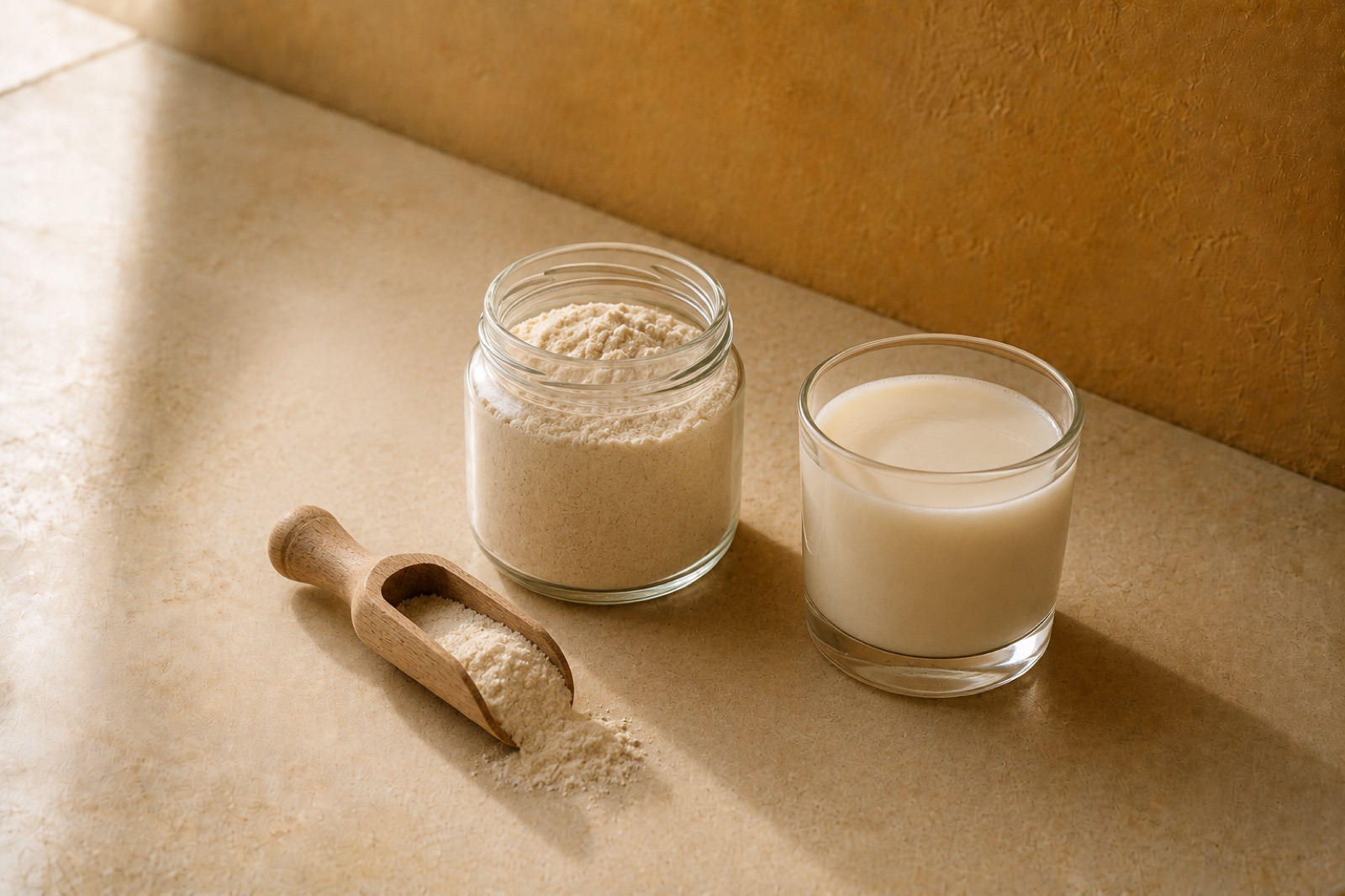
A meaningful fraction of colostrum's antibodies do survive to the intestine, but they act locally and are not absorbed — so survival alone proves nothing. Whether bovine colostrum actually "repairs" a healthy adult's gut is unproven; experts call the studies sparse and contradictory. Interesting mechanism, unproven product.
Scroll wellness TikTok for long enough and you will meet colostrum — the nutrient-dense “first milk” a mammal produces just after giving birth, sold in tubs of bovine (cow) powder and marketed as “liquid gold” for your gut. It is one of the fastest-growing supplement ingredients in a market worth billions, pitched to “repair leaky gut,” “seal the gut lining” and generally fix digestion. The pitch is confident. The evidence is quieter.
The claimA gut-repair supplement in a tub
Colostrum really is a genuinely interesting substance: it is rich in antibodies (immunoglobulins, mainly IgG), growth factors and other bioactive compounds that help a newborn’s gut and immune system get started. The leap the marketing makes is that swallowing bovine colostrum as an adult transfers those benefits to your gut lining. That is the claim worth examining — and it splits into two separate questions people tend to blur together.
Question one: does it even survive your stomach?Partly — yes
This is the objection you hear most (“stomach acid destroys it”), and it is actually the weaker one. The research suggests a meaningful fraction of colostrum’s antibodies survive digestion: one human study that measured what reached the far end of the small intestine recovered close to half of ingested IgG intact. The catch is what “survive” means. These antibodies are not absorbed into your bloodstream; at best they act locally, inside the gut, on their way through. So “it survives” is true — but it does not, by itself, prove it does anything.
The interesting question is not whether colostrum survives your stomach — some of it does. It is whether that translates into a real benefit for a healthy adult.
Question two: does that help a healthy adult?Here the evidence thins
This is the one that matters, and the honest answer is: we do not really know yet. As a physician at Cedars-Sinai put it, “we’re still at the early stages of any evidence to support supplementing with bovine colostrum,” and the studies on whether it “seals” the gut are “sparse and contradictory.” In an NPR review, researchers echoed it — some see a promising mechanism, most call the consumer marketing overblown, and a 2024 systematic review of gut-related outcomes found inconsistent results. The most-cited real-world evidence is narrow (for example, some protection against exercise-induced gut permeability in athletes), which is a long way from the broad “heals your gut” promise on the tub.
The honest verdictPromising mechanism, unproven product
Colostrum is not snake oil and it is not liquid gold — it is an interesting biological material whose supplement claims have sprinted ahead of the data. If you are a healthy adult eating reasonably, there is no strong evidence it will do for your gut what the marketing says, and it is not cheap. It also is not the first place to look for real gut benefit; that remains the unglamorous stuff — fibre, fermented foods, a varied diet feeding a varied microbiome. If you want to try it, it is generally considered safe for most people (dairy allergy aside), but treat it as an experiment, not a cure, and loop in a doctor if you are using it to manage a real digestive condition. This is educational, not medical advice.