I Wanted More Than a Seat at the Table
Living with celiac disease left me feeling left out. I started the Coastal NC Gluten-Free Girls Club to help others find the food, friendships, and sense of belonging I’d been missing.
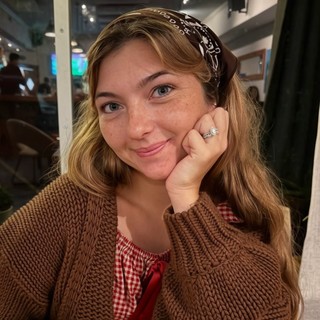

Julia Brower was diagnosed with celiac disease during her freshman year of college, after nearly a year of tests. She went on to found The Well-Fed Celiac, a guide to celiac-safe dining in Coastal North Carolina, and in August 2026 the Coastal NC Gluten-Free Girls Club, whose gatherings are planned around gluten-free guests so nobody has to bring their own food. This essay is her story, in her own words.
My story
My celiac story started about six months into my freshman year of college. I was diagnosed with celiac disease after experiencing significant, unexplained weight loss. At the time, I was adjusting to college life, making new friends, figuring out my routine, and learning how to navigate being away from home. I didn’t realize what was happening to my body or how serious it had become. It took nearly a year for my diagnosis to be finalized after an endoscopy. I remember my doctor explaining that the amount of damage and scarring in my upper intestine was significant. It was no wonder I had lost so much weight. My body wasn’t properly absorbing the nutrients from the food I was eating, and I had become severely malnourished.
When I finally received my diagnosis, I understood that it would change the way I ate. What I didn’t realize was how much it would change the way I lived.
Nearly ten years later, I’m still planning parts of my life around celiac disease. When will I eat next? Will there be something safe for me? Should I eat before I go? Do I even want to go? These are questions that have become second nature to me, but they’re also questions that most people don’t have to consider when making plans with friends or family.
For someone living with celiac disease, going out to eat isn’t always as simple as choosing a restaurant and ordering something that sounds good. Sometimes it means researching menus, calling ahead, asking questions, explaining your diagnosis, and hoping that the person preparing your food understands why those precautions matter. I know what it’s like to have a dozen tabs open and several apps running, trying to figure out whether the information about a restaurant is accurate and up to date. I also know the pressure of being the person who has to decide where everyone eats because you’re the one with dietary restrictions.
View this post on Instagram
Over time, I realized that the hardest part of living gluten-free wasn’t necessarily giving up certain foods. It was feeling like I was missing out on the experiences that surrounded them. I remember the frustration of going to a birthday dinner, ordering a glass of champagne and a side dish because those were my only options, and then splitting the bill with everyone else who had enjoyed a full meal. I was technically included in the celebration, but I couldn’t participate in the same way.
Experiences like that were frustrating, especially as a young woman trying to make friends, enjoy college, and avoid feeling like I was being difficult. Speaking up for yourself can be intimidating when you’re worried about inconveniencing everyone around you.
At the heart of it, I just wanted more opportunities to participate fully. Eventually, I decided to help create them. The spontaneous dinner plans. The brunches with friends. The celebrations. The nights when everyone else could simply show up, order, and enjoy themselves without giving it a second thought. I didn’t want my diagnosis to determine whether I could participate in those moments. I knew I couldn’t be the only person who felt that way.
Finding Community Through Food
When I moved from New York to Coastal North Carolina, I started exploring local restaurants and filming what I found. That became The Well-Fed Celiac, where I share gluten-free dining experiences, recipes, and celiac awareness. What began as documenting my own experiences slowly turned into something much more meaningful. I started hearing from people who had lived in the area for years but didn’t know certain restaurants offered gluten-free options. People who had recently been diagnosed and had no idea where to begin. Parents looking for safe places to take their children. Couples searching for a restaurant where both people could enjoy a date night. I received messages from people thanking me for showing them somewhere new, explaining cross-contact precautions, or simply making them feel a little more comfortable about dining out. I began to recognize something.
There were so many of us looking for the same thing. We wanted recommendations we could trust. We wanted restaurants that understood our needs. But more than anything, we wanted to feel included.
I founded the Coastal NC Gluten-Free Girls Club in August 2026 with a simple mission: Gluten-free doesn’t mean missing out.
I wanted to create opportunities for people living with celiac disease or gluten sensitivities to connect through experiences that were thoughtfully planned with them in mind. Not another event where you have to bring your own food.
The name Gluten-Free Girls Club is playful, but the community has never been exclusively for girls. Our events welcome anyone who wants to be part of what we’re creating. We’ve had friends, couples, mothers and daughters, and people attending on their own. Some people come because they have celiac disease. Others come because someone they love lives gluten-free and they want to share an experience together.
Our first event was a launch party in Surf City in September 2026. I remember how exciting it was to see an idea that had existed only in my head become an actual gathering of people. People were meeting each other, sharing their experiences, talking about restaurants they loved, and exchanging recommendations. For some, it was their first opportunity to spend time with a group of people who understood what it was like to live gluten-free. And for me, it confirmed that this was something worth building.
View this post on Instagram
Since then, I have continued creating experiences throughout Coastal North Carolina. I hosted a market and social gathering in Jacksonville, a gluten-free dinner in New Bern, and a gluten-free Oktoberfest in Scotts Hill. More than 40 people joined us at Freya’s Haus for an Oktoberfest celebration featuring gluten-free soft pretzels from Big Red Bakes, gluten-free pierogi prepared by Chef David, and gluten-free beer provided by Freya’s Haus. Chef David even brought in new equipment specifically for the event.
View this post on Instagram
Each event has been different, but the purpose has remained the same. To create experiences where people can connect without feeling like their dietary needs are an inconvenience. One of my favorite parts of organizing these gatherings has been working with local restaurants, bakeries, and small businesses.
There are business owners who genuinely want to understand the gluten-free community and learn how to better accommodate us. Sometimes that means discussing ingredients and preparation methods. These conversations matter because they extend beyond the people who attend our gatherings. When a restaurant becomes more knowledgeable about celiac disease and gluten-free food preparation, it has the potential to make dining out easier for the next person who walks through its doors. That’s a huge part of why I continue doing this.
I think it’s easy to look at the Coastal NC Gluten-Free Girls Club and see the events themselves. The dinners, the desserts, the activities, and the photos of people getting together. But for me, the purpose has always been bigger than the event on the calendar. It’s about the person who has been diagnosed with celiac disease and feels overwhelmed trying to figure out where they can eat. It’s about someone who has spent years declining invitations because navigating food in social settings feels exhausting. It’s about the parent who wants their child to have the same experiences as everyone else. Celiac disease can feel isolating, even when you’re surrounded by people who care about you. Most of the time, the people around us aren’t intentionally excluding us. They simply haven’t had to think about food the same way we do.
That’s why education and awareness are such important parts of what we’re building. I want people to understand that gluten-free isn’t always a preference or a trend. For someone with celiac disease, it is a lifelong medical necessity.
And while the gluten-free food industry has grown tremendously over the past decade, having more products on grocery store shelves doesn’t automatically make social experiences easier.
We still need knowledgeable restaurants, thoughtful accommodations, and communities that recognize the importance of including everyone. Gluten-free doesn’t mean missing out, and every event is another opportunity to make that mission a reality.
Julia Brower was diagnosed with celiac disease nearly ten years ago. She is the founder of The Well-Fed Celiac, a guide to celiac-safe eating from Wilmington to Jacksonville, North Carolina, the host of the Coastal NC Gluten-Free Girls Club and the owner of Starck Haus Creative. She also writes The Well-Fed Celiac on Substack.