They Handed Their Poo to Science. Then They Built The Gut Stuff.
Lisa and Alana Macfarlane joined Tim Spector’s twin research a decade ago. Today their brand has a Channel 4 series, a weekly podcast and supermarket shelves in two countries.
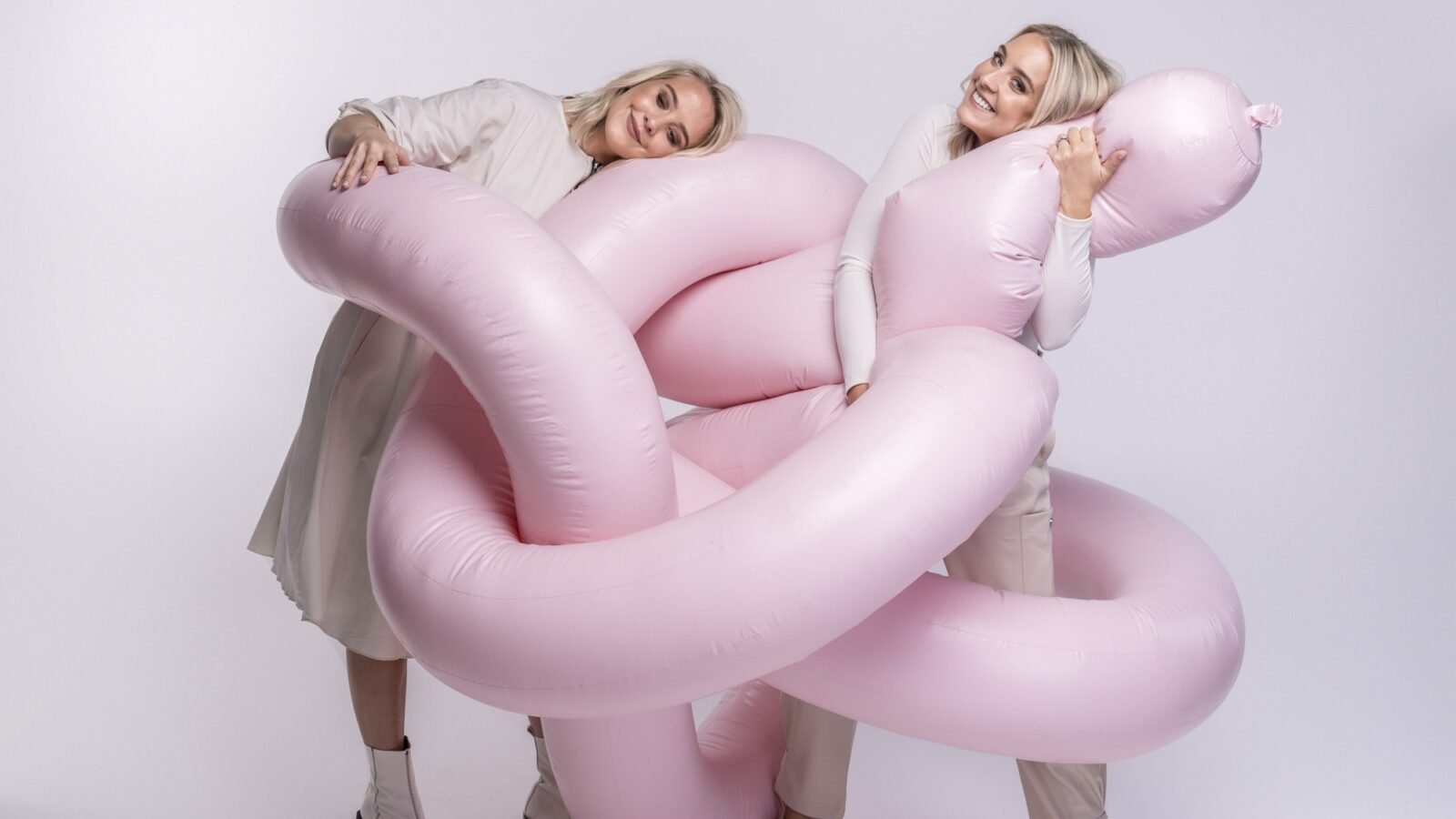
The Gut Stuff is a British gut health brand founded in 2017 by Lisa and Alana Macfarlane, identical twins who took part in Professor Tim Spector's twin research at King's College London about ten years ago and learned that, despite identical DNA, their gut microbiota were largely different. It began as a YouTube series with gut scientists and grew into three books, the six-part Channel 4 series "Know Your Sh!t" (2023), the weekly podcast "Chattin Sh*t" (since 2024), an app, and high-fibre bars and drinks sold by Tesco, Sainsbury's and the Co-op, and now in the Netherlands. Hero Group, the Swiss food group, acquired The Gut Stuff on April 22, 2026; the sisters continue to lead it.
The samples went off in a pot, the way they always do. About ten years ago two identical twins from Scotland, DJs by trade, handed their poo to a research team at King’s College London and became, in their own words, the “chief guinea pigs” of a study run by Professor Tim Spector. What came back was the kind of result that changes a life. Lisa and Alana Macfarlane share every letter of their DNA. Their gut bacteria, the test showed, were nothing like the same. “Thus our ‘gut journey’ began,” they wrote later.
A decade on, that journey is a company called The Gut Stuff, with a television series behind it, three books, a weekly podcast and bars and drinks on the shelves of Britain’s biggest supermarkets. On October 30 the podcast opened its third season with the man who took the samples. “10 years ago, we handed over our poo to Professor Tim Spector in the name of science,” the episode notes begin. “Fast forward a decade and gut health is everywhere.”
View this post on Instagram
The founders: Lisa and Alana Macfarlane, identical twins from Scotland who DJ’d and presented as the Mac Twins before any of this.
The origin: about a decade ago they gave stool samples to Professor Tim Spector’s twin research at King’s College London. Same DNA, very different gut bacteria.
The brand: founded in 2017 as a YouTube series with gut scientists; three books; a six-part Channel 4 series, “Know Your Sh!t”; the podcast “Chattin Sh*t”; an app.
The shelves: high-fibre bars and “fibre pop” drinks in Tesco, Sainsbury’s and the Co-op, and now in the Netherlands.
The deal: Hero Group, the Swiss food group, acquired The Gut Stuff in April 2026. The sisters still run it.
Sources: the founders’ own words and posts; the brand’s website; Channel 4; the podcast feed; Hero Group. Educational, not medical advice.
The guinea pigs: Same DNA, different guts
Twins are prized in medical research because they hold so much constant, and identical twins most of all. The Macfarlanes put it plainly in the biography that opens their first book: “Twins are a great constant for medical research and we became the ‘chief guinea pigs’ for the British Gut project where we discovered that despite us having 100% the same DNA our guts have only 40% the same microbiota.”
The exact number has moved around a little in the telling, which is itself a small lesson in how the science works. In a 2025 interview the figure was 30 to 40 percent. On the October episode, Spector said that identical twins in his research shared only around a quarter of their gut microbes, the brand wrote afterwards. The point the sisters took from it has never changed: the genes you are born with are not the whole story of the gut you end up with, and that leaves a great deal in your own hands.
Before the study, the pair were better known as the Mac Twins, a DJ and presenting act. Their publisher’s note says they gained their profile that way. It was the samples, not the decks, that set the next ten years in motion.
The Gut Stuff: A YouTube series first, then the books
The Gut Stuff was founded in 2017, and it started as content before it was ever a product: a YouTube series in which the sisters put questions to gut scientists, NutraIngredients reported this spring, with the aim of making microbiome science accessible through evidence-based public education. “That’s always been our model,” Alana told the trade title. “Build the brand and the audience first, then let the products follow.”
The brand’s own front page says it in fewer words: “good health starts in the gut and we’re here to make it easy,” it reads, “founded by Lisa & Alana Macfarlane, backed by an army of experts.” The mission underneath is a single sentence: to make gut health affordable and accessible.
The books came next. “The Gut Stuff” was published by Pavilion in February 2021, with a foreword by Spector; “The Gut-loving Cookbook” followed in July 2022; and a third title, “The Gut Stuff: Nourishing recipes and expert advice for a happy and healthy gut,” arrived in March 2024. Its green cover carries a badge that explains the next chapter: “As seen on TV.”
Know Your Sh!t: Six weeks on Channel 4
In January 2023 the sisters fronted their own series on Channel 4, one of Britain’s main national networks. “Know Your Sh!t,” commissioned as a six-part, hour-long health format from the production company Monkey, put identical twins Alana and Lisa Macfarlane in front of the camera with a resident gastroenterologist, Dr Rabia Topan, and a consultant dietitian, Sophie Medlin, according to Queen Mary University of London, where Topan works. It began on Tuesday, January 17, 2023, at 8 p.m., and ran for six weeks.
For a brand built on the idea that nobody should be embarrassed to talk about their gut, a prime slot on national television was the argument won in public. The title did the rest.
Chattin Sh*t: A celebrity and a gut scientist, every week
The podcast arrived in October 2024, made with Spirit Studios, and its format is the brand’s whole idea in miniature. “Join Lisa and Alana Macfarlane (aka The Gut Stuff) as they chat sh*t with a celebrity guest and one of the world’s best gut health experts,” the show’s description says. Rachel Stevens of S Club 7 sat down with the NHS surgeon Dr Karan Rajan; Giovanna Fletcher with the GP Dr Zoe Williams; the comedian Russell Kane with the nutritionist Emily Prpa. Spencer Matthews, Hilary Whitehall and the nutritionist Rhiannon Lambert, on the subject of fibremaxxing, have all taken a turn. Between the full episodes come “Quick Dumps,” mini-episodes cut to fit the twelve minutes the hosts say is the most anyone should spend on the loo.
Three seasons in, the show has 28 episodes behind it and a weekly release on Apple Podcasts, Spotify and YouTube. And this autumn it closed a circle. Spector’s return on October 30, under the title “From Poo Samples to a Gut Health Revolution,” was billed by the sisters as the scientist coming back to tell them “what we’ve got right, what we’ve got VERY wrong and why gut health is still full of sh*t.” A week later Professor Giles Yeo of the University of Cambridge took on weight-loss injections.
The shelves: Bars, fibre pop and an app
The products did follow. The Gut Stuff’s high-fibre fruit and nut bars, each carrying about 10 grams of fibre, and its “fibre pop” canned drinks are stocked by Tesco, Sainsbury’s and the Co-op, the brand’s own listing says, and an app offers a 100-day programme for people starting from scratch. This year the bars crossed the North Sea: they are now sold in the Netherlands, at Albert Heijn, the brand’s first shelves outside the United Kingdom. (For what 10 grams means against a day’s target, our fibre calculator does the sum.)
Hero Group: The sisters stay at the helm
On April 22, 2026, Hero Group, the Swiss food group that also owns Deliciously Ella, announced that it had acquired The Gut Stuff. The founders, Hero said, would keep driving the brand’s growth, and every employee would stay. Its chief executive, Christian Schierbaum, described gut health and fibre as a small but growing trend in what the company calls better snacking.
The sisters’ own statement read like relief. “As founders, during the tough early days, you always dream of finding a home for what you’ve built,” they said. “As soon as we met the team at Hero, we knew it was the place.” Being inside the group, they added, gives them “the engine and resources to drive at breakneck speed to deliver all the ambitions.”
“It feels less like handing over the keys and more like getting a much bigger engine.” Alana Macfarlane, to NutraIngredients
“Hero’s support means we can finally execute on ideas we’ve had for years but didn’t have the resource to bring to life,” Alana told NutraIngredients two days later. “Gut health has properly landed,” she said; it had gone from a niche wellness conversation to mainstream behaviour, and this felt like the moment to bring in a partner who could help them run.
Ten years after two DJs handed a scientist a sample, the subject they could not stop talking about is a mainstream one, and the company they built around it has the backing to go further than Britain. The sisters, by every account including their own, are still building.
Where this comes from: Sources
The founders’ account of the twin study and their DJ years is from their author biography at Pavilion Books, which also gives the publication dates of their three books. The brand’s mission wording is from thegutstuff.com; its retailers are from its own Instagram biography. The television series is from Channel 4’s press release and Queen Mary University of London. Podcast details and episode wording are from the show’s feed and Apple Podcasts listing, read on November 8, 2026. The acquisition is from Hero Group’s announcement of April 22, 2026, and Alana Macfarlane’s remarks from NutraIngredients, April 24, 2026. No purchase price has been disclosed and none is reported here. Gut Health Times featured the sisters in an Instagram carousel on November 11, 2026, published as a collaboration with The Gut Stuff, which also gave permission for the photographs used here; the Macfarlanes’ own account was invited to the post as well. Gut Health Times has no commercial relationship with The Gut Stuff or Hero Group. This article describes what the cited sources say and is educational, not medical advice.