Georgia McDermott: The ‘Digestively Challenged’ Cook Behind @georgeats
Georgia McDermott started photographing her dinners on a share-house floor while her health was, in her words, on a rapid decline. Two cookbooks later, the Melbourne cook behind @georgeats is still proving that food for a difficult gut can be the best thing on the table.
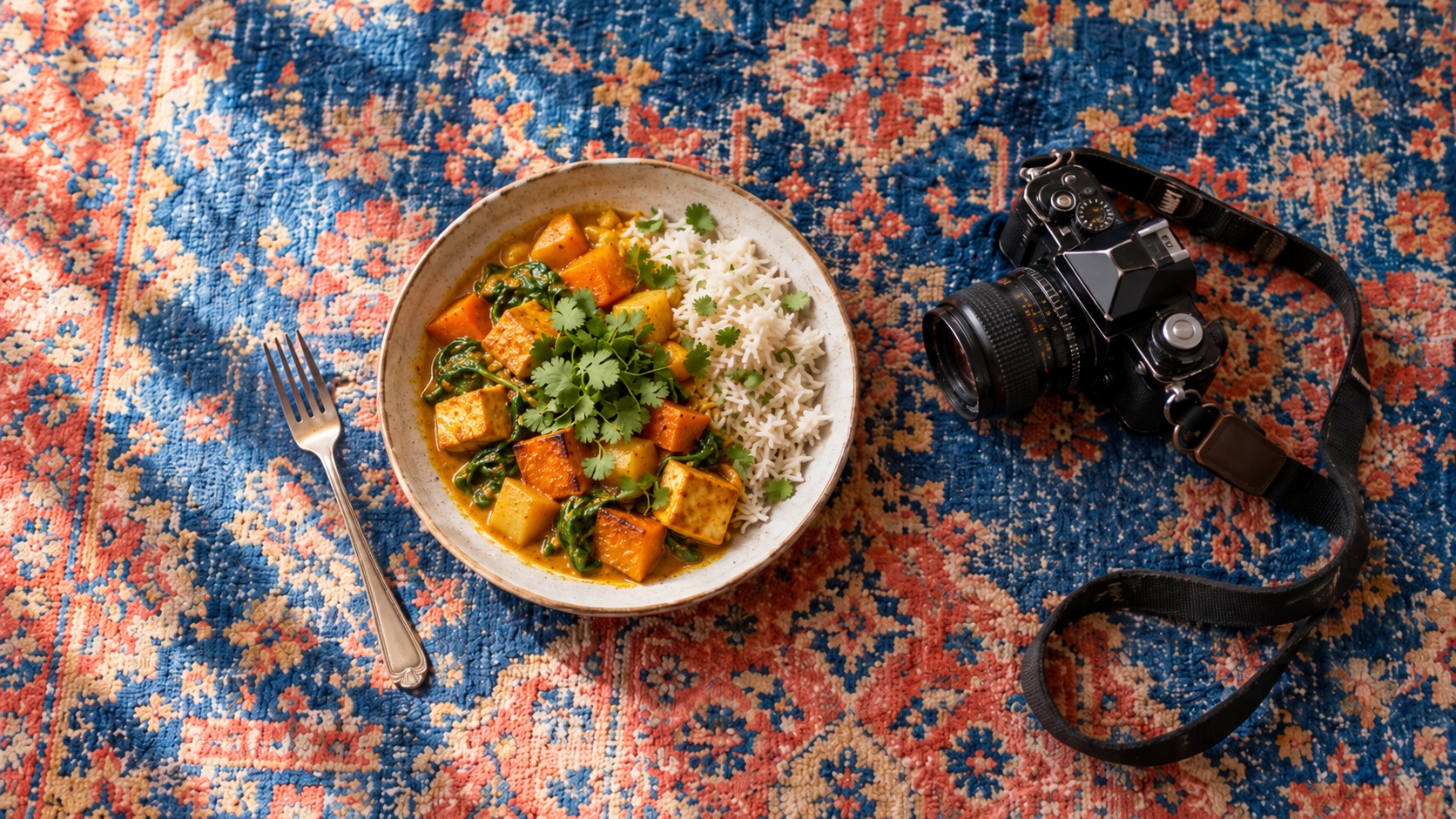
Georgia McDermott is a Melbourne recipe developer, food stylist and food photographer who runs @georgeats and wrote two cookbooks, FODMAP Friendly (2018; US edition 2020) and Intolerance-Friendly Kitchen (2022). She lives with gastroparesis and SIBO, both diagnosed in her twenties, and follows a gluten-free, low-FODMAP diet that she says has been incredibly helpful in managing and minimising her symptoms. She is not a dietitian or a doctor, and she tells readers to consult one before starting any diet. The low-FODMAP diet was developed at Monash University for irritable bowel syndrome, and the American College of Gastroenterology recommends a limited trial of it for IBS symptoms.

George Eats began on a living-room floor. Georgia McDermott was at university, sharing a house and studying criminology and Italian (“of all things,” she notes), and her health was “on a rapid decline, courtesy of an unnamed gastroenterological issue, which remains unsolved to this day.” “In my zeal to address my never-ending list of woes, I started experimenting with/photographing what I was eating,” she writes, “and Georgeats was born.” Today McDermott is a Melbourne recipe developer, food stylist and food photographer with two cookbooks and more than 150,000 Instagram followers. Her recipes are gluten free, onion and garlic free and mostly vegetarian, and much of her site is given over to low-FODMAP cooking. She is not a dietitian or a doctor, and she tells her readers so, often. Her Instagram bio still introduces her the way it all started: a “digestively challenged food enthusiast.”
The diagnosisA slow wave, and a lot of trial and error
The diagnoses came later. In her twenties McDermott was diagnosed with gastroparesis and then with small intestinal bacterial overgrowth, or SIBO, as she told SBS Food in 2022. “Gastroparesis is gut motility disorder where the wave that pushes your food through your digestive system doesn’t work, as it should,” she said. “So the food sits there and ferments.” On her own site she calls that wave “incredibly slow, which is quite fitting,” the kind of joke only someone living with it gets to make. Our gastroparesis explainer covers the condition itself.
Food came into it gradually. Going gluten free brought “considerable relief from constant headaches,” she writes, but her health went “downhill AGAIN a few years later.” She had once “immediately discounted” the low-FODMAP diet “for being too hard.” The second time around, she writes, “I was (and still am, in most aspects of my life) desperate.” She has found the framework “incredibly helpful in managing and minimising my symptoms.” Those are her verbs, and they are the right ones: managing, not fixing.
The detourThe lawyer who never was
The plan had been law. Her degree was “geared towards doing a postgraduate law degree,” and she had already bought the LSAT books. But by graduation she was a year or two into Georgeats and “obsessed with it.” She took a year off, moved home to her parents (“an ego bruising move”) and took a part-time admin job in a bank’s media department that left her time for the account. When the contract ended, the bank’s PR company asked her to make content for some of its brands. “I would have made an appalling lawyer,” she writes.
After two years on “meagre money,” she had the clients to move back to Melbourne, where she now lives and works. She still shoots on a camera she has owned since at least 2018 (“I know I am due for an upgrade”), makes one or two things a day because “Food waste is the devil,” and counts on friends and family to take the surplus cake.
The booksTwo cookbooks for the foods you miss
Her first book, FODMAP Friendly, came out from Pan Macmillan Australia in July 2018: more than 90 recipes, mostly vegetarian and some pescetarian. In 2020 The Experiment published a US edition under the same title, subtitled 95 Vegetarian and Gluten-Free Recipes for the Digestively Challenged, a phrase straight from her bio. Its copy gets at what makes her approach unusual: FODMAP sensitivity varies from person to person, so the book helps readers work out what suits them. “Onion and garlic don’t bother you? Add them!”
The second, Intolerance-Friendly Kitchen (Lantern, Penguin Random House Australia, 2022), is the baker’s book: yeasted croissants, chocolate babka, starch-free sourdough, all gluten free, low FODMAP and vegetarian. Among her favourites, she told SBS Food, were tofu dumplings with wrappers made from “a combination of gluten-free flour, psyllium husk and boiling water,” and a laksa. “Laksa is always a hard dish to make without onion and garlic,” she said. “But I feel I have succeeded with this recipe.” The books put her in a small tradition of cooks who rebuilt their own diets and then wrote the book, with Heather Van Vorous of Eating for IBS, Dédé Wilson of FODMAP Everyday and, in her own city, Melanie Persson, who rebuilt her cooking after a coeliac diagnosis.
View this post on Instagram
The methodGrams, thresholds and the fine print
What sets her recipes apart is the homework underneath. Low-FODMAP eating is about portions as much as ingredients, so her notes carry numbers, sourced to Monash University and dated. “According to Monash, common ripe banana is low FODMAP in up to 47g serves (as of August 2026),” reads one. Where onion and garlic are the problem, she builds the flavour back with spring onion greens, leeks, asafoetida, or ginger cooked down until it adds, as she told SBS Food, “a back note of flavour.” Or, as she put it under a homemade chilli crisp in June, “garlic and I don’t see eye to eye.”
View this post on Instagram
The fine print gets the same care. “I am not a doctor or dietician and you should consult with a professional before embarking on any diet,” she writes on recipe after recipe. Her day-by-day account of a prescribed liquid diet she did for SIBO in 2020 carries the same caveat near the top (“This is purely my experience on the diet”) and reads as honest rather than triumphant. She tried it, she writes, “when the FODMAP diet wasn’t even giving me any relief,” and after a year of testing gluten-free cakes and croissants for a cookbook, she “ended up back at square one. And the cycle repeats!”
She is just as open about what no recipe fixes. The conditions affected her mental health, she told SBS Food, and they are easy for other people to miss: “People don’t understand just how much it all sucks.” Her health has grown more complicated since. “My health issues are increasingly complex,” she told newsletter readers in August, explaining why a long-time vegetarian has recently started eating some meat. Her advice for anyone starting out has not changed. “I would always recommend seeing a doctor or dietitian,” she said, and leaning on friends, because “you’d be surprised at how supportive people can be if you get everyone involved. You don’t have to go through it alone.”
“You don’t have to go through it alone.”
What the research actually measuredA diet built for IBS
The diet McDermott leans on was built for irritable bowel syndrome, in her own city, by researchers at Monash University. Their best-known trial, published in Gastroenterology in 2014, gave 30 people with IBS three weeks each of a low-FODMAP diet and a typical Australian diet, in random order, with almost all of the food provided. Overall symptom scores were about half as high on the low-FODMAP diet (22.8 against 44.9 on a 100-point scale), with less bloating, pain and wind. It was small and short. The American College of Gastroenterology’s 2021 IBS guideline recommends “a limited trial” of the diet for overall IBS symptoms, and Monash describes three steps, not a forever diet: two to six weeks of swaps, then reintroduction challenges to find personal triggers, then the least restrictive diet that keeps symptoms settled, ideally with a dietitian trained in IBS.
That research was in IBS, not gastroparesis or SIBO, and it should not be read as a treatment for either. Gastroparesis has its own, thinner evidence on diet. A 2014 Swedish trial of 56 people with insulin-treated diabetes and gastroparesis found that a small-particle diet, taught by a dietitian over 20 weeks, eased nausea and vomiting, fullness and bloating more than standard advice did, though not abdominal pain. The ACG’s 2022 gastroparesis guideline suggests a small-particle diet, a conditional recommendation based on low-quality evidence. These are findings, not endorsements, and none of them replace a clinician who knows your case.
The disclosure mapWhere her interests sit
McDermott earns her living from food, much of it for sensitive guts. Beyond her two cookbooks, she sells recipe e-books on her site, including gluten-free sourdough and yeast-free baking collections and several built around the Ninja Creami ice-cream maker, and she runs a Substack with paid recipe posts. “I develop so many e-books because I want to rely as little as possible on ads and paid work,” she wrote in July. She does take paid work: she has developed recipes in partnership with Remedy Kombucha; her Instagram carries posts marked as ads, including one for gluten-free Oreos in Australia; her client page lists work for brands including Tourism New Zealand, Williams Sonoma and SodaStream; and recipes of hers appear on the health insurer Medibank’s Live Better site. Her website carries advertising and some retailer affiliate links. She is a recipe developer, food stylist and food photographer, not a dietitian, a nutritionist or a doctor. Gut Health Times has no commercial relationship with her or any of these companies. This profile is educational, is not medical advice, and was prepared without input from her. Anyone with ongoing digestive symptoms should start with their own doctor.