Vanessa Kimbell Has Spent 20 Years Making the Case for Bread
The founder of The Sourdough School argues that slow fermentation, not gluten, decides how a loaf lands. Her sixth book, “The Sourdough School: Proven,” is due in February.
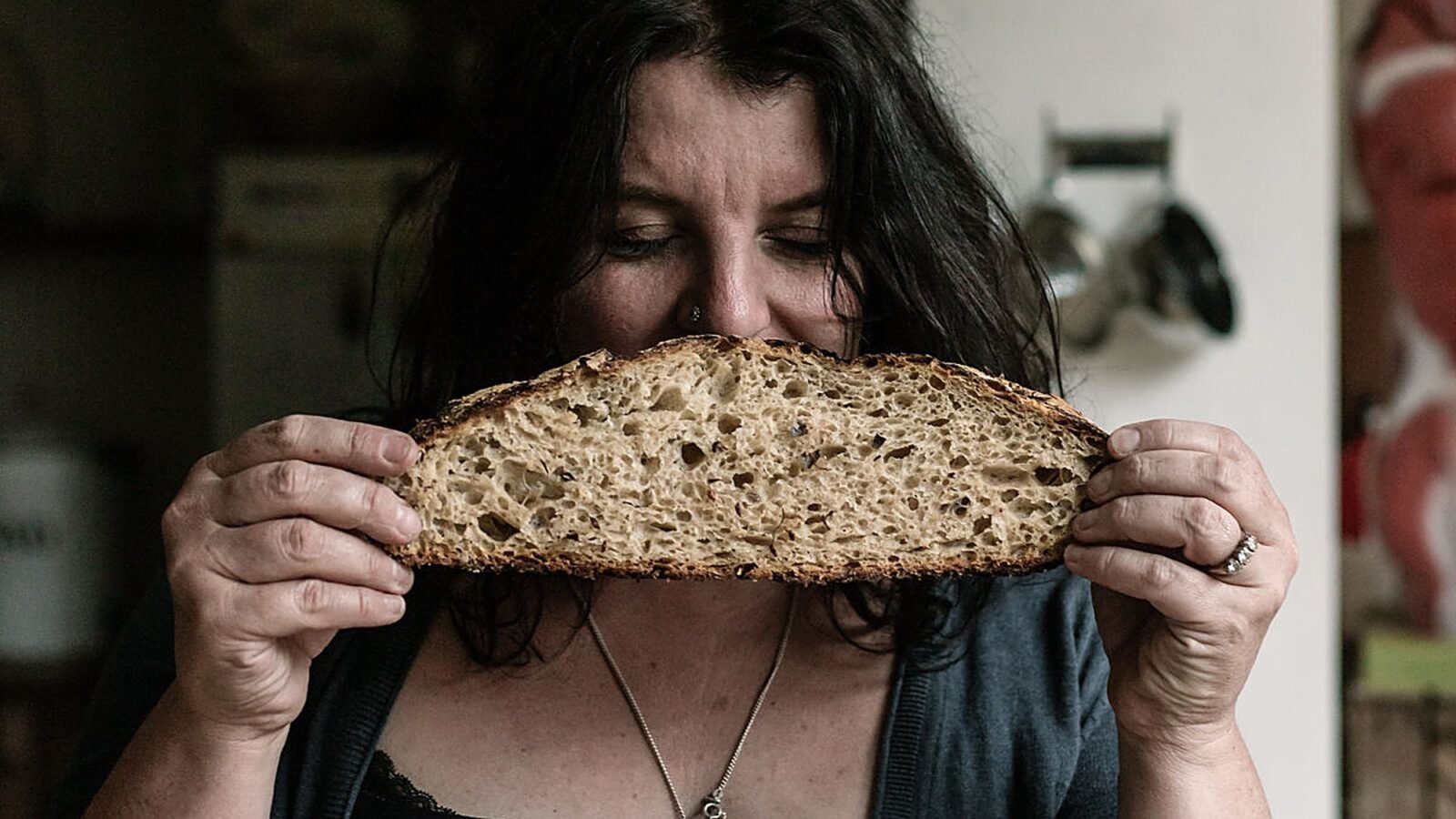
Dr. Vanessa Kimbell is a British baker and researcher who founded The Sourdough School in Pitsford, Northamptonshire, and holds a doctorate from Middlesex University in baking as lifestyle medicine and preventative health; she is not a medical doctor. Her argument, made over more than two decades, is that people who struggle with bread are usually reacting to how it was made rather than to bread itself: real sourdough ferments for 18 to 36 hours, she writes, long enough for bacteria to break down parts of the wheat that many people find hard to digest, a step that industrial bread-making was designed to skip. She says sourdough is not safe for people with coeliac disease. Her sixth book, "The Sourdough School: Proven" (Kyle Books), is listed by its publisher for February 4, 2027.

“Every year, without fail, the same posts land in my inbox,” Dr. Vanessa Kimbell wrote in February. “Someone has been to Italy, or France, or Spain, and they’ve eaten bread.” Bread with every meal, for a week or two, and they felt fine: no bloating, none of the fog. Then they came home, made a slice of toast, and all of it came back.
She has been hearing that story for more than two decades, and she takes it seriously, because it was once her own. The title of her February piece gives her answer to the holiday puzzle in seven words: why gluten is not the most likely villain. The loaf from a boulangerie, she argues, “is far more likely to have had longer fermentation,” and the industrial sliced loaf waiting at home is made by a process that “was specifically designed to eliminate long fermentation.”
Kimbell is the founder of The Sourdough School, in the village of Pitsford in Northamptonshire, England, and the holder of a doctorate from Middlesex University in what her school’s website calls baking as lifestyle medicine and preventative health, a field it says did not exist before she created it. She is not a medical doctor, and her site says so. Her sixth book, “The Sourdough School: Proven,” is her method for baking the bread she has spent twenty years describing, and it is due in February.
View this post on Instagram
The baker: an apprentice in a French bakery at 18, founder of The Sourdough School in Northamptonshire, England, and a doctorate from Middlesex University in baking as lifestyle medicine. Not a medical doctor.
The puzzle: every year, she writes, people tell her they ate bread happily on holiday in France, Italy or Spain and could not at home.
Her answer: real sourdough ferments for 18 to 36 hours, she writes, and that time changes the loaf; most industrial bread is made by a process designed to skip it.
Her caveat: “Digestion is contextual,” and sourdough is not safe for people with coeliac disease, she says.
The book: “The Sourdough School: Proven,” her sixth, is listed by its publisher for February 4, 2027.
Sources: Dr. Kimbell’s own writing and interviews; her school’s website; her publisher. Her claims, not medical advice.
The holiday loaf: Why bread abroad feels different, in her account
The holiday effect is real, Kimbell writes, and not imagined; she notices it in herself on her own retreats in Tuscany. What she objects to is the explanation that usually follows it online, in which one ingredient is the culprit: modified wheat, a weedkiller, “chemicals.” The leap from feeling better on holiday to a single villain gets attention, she says, and misses a more interesting story. “Stop looking for one villain.”
The more interesting story begins with a sentence she sets on its own: “Digestion is contextual.” How a loaf lands depends on the person eating it and the day they are having: “how much you walk, how stressed you are, how you sleep,” what else is on the table, how much fiber the week has held. “The pace is different,” she writes of a holiday. In a Mediterranean meal, bread arrives as part of the meal, after the vegetables, the oil and the protein; in Britain it is often eaten alone, as toast or a sandwich. And the bread itself varies, in fermentation, acidity, flour, additives and freshness, so that the loaf in a village bakery and the loaf in a plastic sleeve are, in her telling, different foods that share a name.
Her own story: Antibiotics, then a bakery in France
Kimbell qualified as a baker and chef in Britain at 18 and served her apprenticeship in a bakery in the Dordogne, in southwest France. The turn came a few years later. “When I was in my early twenties, my microbial system was massively disrupted by antibiotics,” she wrote in 2020. “Within a few weeks, I was unable to digest wheat.” The bread she had been trained to make was off the table, and so, apparently, was every other kind. “It was only when I returned to the bakery in France where I’d trained that I realised I could digest sourdough.”
Her explanation, then and now, is that the work her gut could no longer do had been done in the dough. She went on to teach, first from her kitchen table and then at the school she founded, where her site says she has taught thousands of people over the past two decades; the doctorate, in the nutrition and digestibility of bread, came later, and with it the “Dr.” on her books. Five of them preceded this one, beginning with “Prepped!” in 2009.
Eighteen to thirty-six hours: What slow fermentation does, as she describes it
“Real sourdough takes between eighteen and thirty-six hours, depending on the baker’s approach,” Kimbell writes in her guide to real sourdough. In that time, in her account, the wild yeasts and lactic acid bacteria in the starter partially digest the gluten proteins into smaller fragments; long, slow fermentation, she writes, citing studies, “significantly reduces the FODMAP content of bread,” the fermentable carbohydrates that trouble many people with irritable bowel syndrome; and the organic acids break down the phytic acid in the grain, releasing minerals it would otherwise bind.
The industrial loaf, by contrast, can be made in under an hour. The method behind much of Britain’s sliced bread, devised in the 1960s in the Hertfordshire town of Chorleywood, replaces the long rise with intense mixing and additives; it “was specifically designed to eliminate long fermentation,” Kimbell writes. The gluten is the same in both loaves. “The process changes everything around the gluten.”
“It’s not that they can’t eat bread — it’s that they can’t eat bread that hasn’t been properly fermented.” Dr. Vanessa Kimbell, The Sourdough School Magazine
That is the line she returns to. When people tell her that bread does not suit them, she writes, they are usually reacting to bread that has not undergone that transformation. It is a claim she fences carefully. “I want to be clear: sourdough is not safe for people with coeliac disease,” she writes, and anyone who suspects the condition, she adds, should see a doctor before changing their diet, since the tests only work while gluten is still being eaten. As for non-coeliac gluten sensitivity, she notes that in blinded challenges many people who believed they were sensitive did not react, which suggests to her that “the trigger may not be gluten itself, but something else in the wheat.”
She has said the same thing less formally. “I got really cross when people blame gluten for everything,” she told the ZOE podcast, in an episode with Professor Tim Spector titled “Can bread be healthy?” “Gluten bashing.” What matters, she said, is the method: “There’s an extreme difference between different processes of making bread.” Spector’s answer to the episode’s question was his own: “Absolutely. It can. Yes, but perhaps not for everybody and not all the time.”
Real and fake: What she reads on a label
The word on the packet does not settle it, in her view. “Most of what’s sold as ‘sourdough’ today is not what I would consider real sourdough at all,” she writes in the guide. “This is something I feel strongly about, because so many people are being misled.” Her test is the ingredients list. Real sourdough is flour, water and salt; if yeast appears as a separate ingredient, or there are E numbers, dough conditioners or preservatives, she writes, it is not true sourdough, whatever the label says. On the podcast she put it bluntly: “the fake sourdough that is out there is as bad as the bread that we’ve been talking about.” Her advice for the holiday effect, in February, came as plain headings: find better bread, eat it as part of a meal, “rebuild your fibre,” slow down. (For what a day’s fiber looks like in food, our fiber calculator does the sum.)
Proven: Her sixth book, and the bread it teaches
The book gathers all of this into a method. “What if the bread you bake could improve your gut, boost your mental health and even support the planet?” its publisher’s description begins. “Proven is the programme taught at The Sourdough School,” built, it says, on over twenty years of her work, and it teaches readers to bake what she calls personalised Diversity Bread and to adapt their loaves “according to your genetics, gut microbiome and environment.”
Diversity Bread is her trademark and her idea: a loaf that brings “the crops from every year of a regenerative farming rotation together,” her school explains, milled into one flour. The site calls it “the first-ever bread specifically designed to nourish the gut with diversity,” and in the same breath declines to promise anything: “whilst we can make no promises about anyone’s health.” She holds herself to that line. “I can’t make health claims about Proven,” she wrote on her site in August 2025 of the bread the school sells under the same name. “That’s not how this works, and honestly, I wouldn’t want to.”
The book is published by Kyle Books, an imprint of Octopus, as a hardback, and the publisher lists it on sale on February 4, 2027; her own website has at times given an earlier date.
Worth naming plainly: What she sells
Kimbell’s argument and her business are the same thing, and she does not pretend otherwise. The Sourdough School sells courses, in Pitsford and online; she sells books; the school sells its Proven bread and its Diversity flour; and her holiday piece closes, as her posts do, with discount codes for sponsors. Gut Health Times has no commercial relationship with Dr. Kimbell, The Sourdough School or her publisher.
Where this comes from: Sources
Dr. Kimbell’s account of the holiday effect, her list of what shapes digestion and her advice are from her article “Why You Feel Better Eating Bread on Holiday” (February 24, 2026); her description of fermentation, her line on properly fermented bread, her coeliac warning and her label test are from her guide to real sourdough (February 1, 2026), both on her school’s website. Her own story is from her essay for Wicked Leeks (May 21, 2020). Her training, doctorate and books are from her biography on the school’s site, which states that she is not a medical doctor. The podcast remarks are from ZOE’s episode page. The book’s description, format and date are from Octopus Books; Diversity Bread is described on the school’s site. The photograph is from The Sourdough School’s press pages. Gut Health Times featured Dr. Kimbell in an Instagram carousel on November 17, 2026, published as a collaboration with her account. Every claim about bread and the gut in this article is hers or her school’s, reported as such; this article describes what the cited sources say and is educational, not medical advice.