Tropical Smoothie’s Fanta Phantom Has 78 Grams of Sugar. Two Words at the Counter Take 29 of Them Out
Tropical Smoothie Cafe’s first Halloween smoothie comes in its first clear cup, and its release gives no numbers. The chain’s own nutrition guide does: 370 calories and 78 grams of sugar as served, 49 if you say “no turbinado,” 108 if you say “full.” We read the sheet against a can of Fanta and the fructose breath tests.
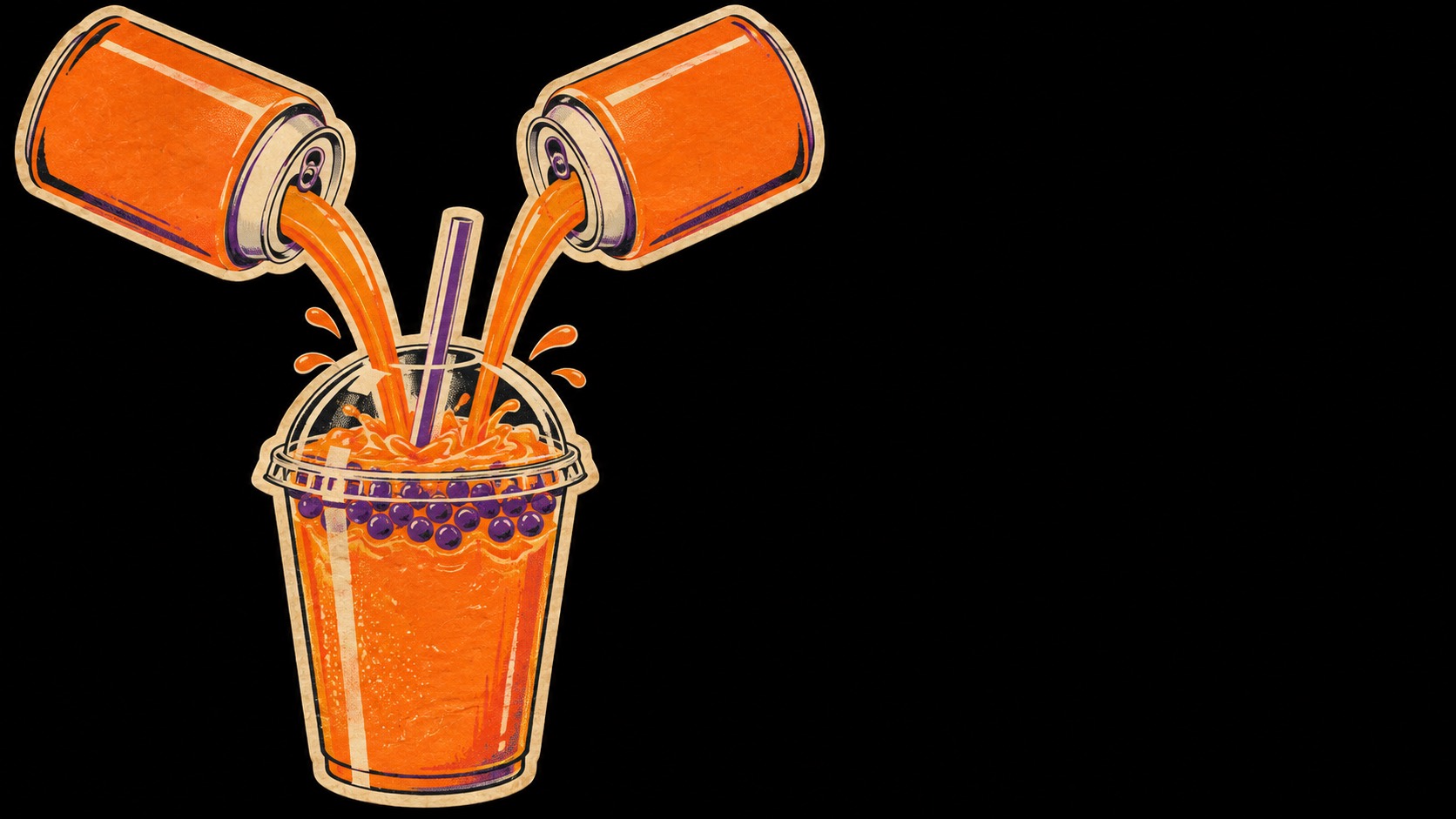
The Fanta Phantom Smoothie has 370 calories and 78 g of sugar in its 24 oz default build, by Tropical Smoothie Cafe's own Health & Nutrition Guide, read October 9, 2026. Ordered with no turbinado sugar it is 260 calories and 49 g; with full turbinado, 490 and 108; with Splenda, 260 and 49. The 29 g difference is the turbinado, and the guide's own note says no build is sugar-free. A 12 fl oz can of Fanta Orange lists 44 g, so the default cup is about 1.8 cans' worth, before the popping boba, which has no line on the sheet. The cup also lists 4 g of fiber and milk as its allergen, and the sheet dates the smoothie October 7 to November 3, 2026.

Tropical Smoothie Cafe has never sold a Halloween smoothie, and for its first one it changed the cup. The Fanta Phantom went on sale on Wednesday at nearly 1,800 cafes in 44 states: bright orange, with purple popping boba sitting on top, in what the chain calls its first clear smoothie cup, so you can see both. It is also the chain’s first smoothie made with The Coca-Cola Company, blended from Fanta Orange flavored syrup, mango, banana, nonfat yogurt and cinnamon. “We knew we wanted to do something unexpected,” the chain’s chief marketing officer says in the release. What it does not say is what is in the cup by the gram. The chain’s own nutrition guide does, on a page dated to the promotion, so we read it, and then we read it against a can of Fanta.
Google already finishes the sentence: fanta phantom smoothie review, tropical smoothie sugar content, tropical smoothie sugar free options, popping boba ingredients, popping boba calories.
The announcement: A syrup, a boba and a see-through cup
The release, dated October 7 out of Atlanta, commits to the recipe, the cup and the reach. Coca-Cola’s foodservice side calls it a chance to “reimagine Fanta Orange in an entirely new way,” and the chain says the purple vanilla-flavored boba can go on any smoothie for a limited time. It is at participating cafes “for a limited time.” It names no end date, no serving size, no calories, no sugar, no price, and nothing about what the syrup or the boba are made of. We searched it for calorie, sugar, gram and ounce: none.
View this post on Instagram
The sheet: Four rows on the chain’s own nutrition guide
The chain’s nutrition page links to a Health & Nutrition Guide PDF. Its main table is dated May 14, 2026. A later page is headed “Fanta Phantom Smoothie 10/7/2026 – 11/3/2026,” which is the only end date in anything we read. The row for the smoothie as served, 24 ounces, reads 370 calories, 0.5 grams of fat, 93 grams of carbohydrate, 4 grams of fiber, 78 grams of sugars, 100 milligrams of sodium and 4 grams of protein. The allergen line says milk, and the page marks it gluten friendly and vegetarian. The menu page promises nutrition information but loads it in the browser; the PDF is the document.
Three more rows do the interesting work. “Add Full Turbinado Sugar” is 490 calories, 123 grams of carbohydrate and 108 grams of sugars. “No Turbinado Sugar” is 260 calories, 64 grams of carbohydrate and 49 grams of sugars. “Add Splenda” is 260 calories, 71 grams of carbohydrate and the same 49 grams of sugars. The guide’s small print explains the pattern: every smoothie is 24 ounces and “made with turbinado sugar unless otherwise requested,” and Splenda can stand in for it, “but all smoothies will contain sugar derived from fruit and other ingredients and are not sugar-free.” Subtract the rows and the turbinado in the default cup is 29 grams of sugar and 110 calories. The other 49 grams come from the syrup, the fruit and the yogurt, and stay in the cup whatever you say at the counter. The Splenda build, on the sheet, is the no-turbinado build plus 7 grams of carbohydrate, with no extra sugar and no extra calories listed.
One more thing the sheet implies, and this is our arithmetic. A row called “Add Full Turbinado” implies the default is not full. The main table shows what full means at this chain: switch Sunrise Sunset to Splenda and its sugars go from 106 grams to 48, Bahama Mama from 112 to 54, Mango Magic from 104 to 46, each time a drop of 58 grams and 230 calories. The Phantom’s turbinado is 29 grams and 110 calories, and “Add Full” takes it to 59 and 230. Our reading: the Fanta Phantom is built with about half the chain’s usual turbinado, and “full” is the usual.
Two words at the counter, no turbinado, take 29 grams of sugar and 110 calories out of the cup, by the chain’s own sheet.
The table: Beside a can of Fanta, and beside the rest of the menu
| Cup (24 oz unless noted) | Calories | Sugars | Fiber |
|---|---|---|---|
| Fanta Phantom, as served | 370 | 78 g | 4 g |
| Fanta Phantom, no turbinado | 260 | 49 g | 4 g |
| Fanta Phantom, add full turbinado | 490 | 108 g | 4 g |
| Fanta Orange, 12 fl oz can | 160 | 44 g | None listed |
| Sunrise Sunset | 460 | 106 g | 4 g |
| Bahama Mama | 520 | 112 g | 4 g |
| Detox Island Green (no turbinado in the recipe) | 210 | 39 g | 6 g |
Coca-Cola’s own Fanta page lists Fanta Orange’s panel for the 20-ounce bottle: 270 calories and 73 grams of sugar, all of it added. The 12-ounce can, on the panel a grocer prints, is 160 calories and 44 grams. So the default Phantom carries a little more sugar than the bottle and, our arithmetic, about 1.8 cans’ worth; with no turbinado it is about 1.1 cans, and with full turbinado about 2.5. Can and bottle list the same ingredients, carbonated water and high fructose corn syrup first; whether the cafes’ syrup is sweetened the same way, neither company says. Against the rest of the menu the Phantom is one of the lighter cups: the classics above 100 grams carry the full scoop, and Detox Island Green, the one smoothie the chain makes without turbinado, is 39.
The dose: Where the fructose breath tests start to turn
The gut question in a cup like this is fructose, because nearly every sugar in it is part fructose by chemistry. Turbinado is sucrose, which the FDA describes as glucose and fructose joined together; the corn syrup in Fanta Orange, by the same page, is 42 or 55 percent fructose, and the 55 version “is used primarily in soft drinks.” Mango’s sugars run about 60 percent fructose once the sucrose is split, by USDA’s table, and banana’s about half. The yogurt’s sugar is lactose, which is not fructose at all.
How much fructose a healthy gut takes in one sitting has been measured with breath tests, which pick up hydrogen from sugar that got past the small intestine. In a 2007 University of Iowa study, 20 healthy adults drank 15, 25 and 50 grams of fructose on separate days: nobody malabsorbed 15 grams, two of 20 malabsorbed 25 grams without feeling anything, and at 50 grams 16 of the 20 tested positive and 11 had symptoms. The authors concluded healthy people “have the capacity to absorb up to 25 g fructose.” A 2005 University of Kansas study of 15 adults was less reassuring at the lower dose: more than half showed malabsorption at 25 grams, more than two thirds at 50, and symptom scores rose above baseline at both. The symptoms in question, in a 2014 review by one of the Iowa authors, are bloating, belching, gas, abdominal pain and loose stools.
Where does the Phantom land? The chain does not publish the fructose, the portion of each ingredient, or the syrup’s recipe, so we cannot give a figure. We can give a range, flagged as our arithmetic: apply “roughly half” to everything but the lactose and 78 grams of sugar is somewhere in the 30s of fructose, while the 49-gram no-turbinado cup is in the low 20s, near the line the breath tests use. Two caveats run the other way. The trials gave pure fructose in water on an empty stomach; the Kansas authors themselves listed fructose-glucose mixtures like corn syrup, and fructose eaten with food, as the cases still to be studied, and a smoothie is both. And responses varied from person to person at the same dose.
The small print: Lactose, boba, fiber, Splenda and the 50-gram line
The milk on the allergen line is the nonfat yogurt. The chain does not say how much goes in; USDA’s generic entry for plain skim-milk yogurt lists 7.7 grams of sugar per 100 grams, and Greek nonfat 2.6 grams of lactose, so on any plausible scoop the lactose is a single-digit share of the 78. The same arithmetic ran in our dirty soda cup: about a gram of lactose, and the sugar was the story.
The popping boba has no line on the sheet, so every number above is before the topping. Popping boba is a flavored syrup inside a thin gelled skin set with calcium. One supplier label we read, Fanale’s mango popping boba on a restaurant-supply listing, gives 25 calories and 5 grams of sugar per three tablespoons and lists water, fructose, mango juice, starch, calcium lactate and seaweed extract. That is the product type, not the chain’s boba, whose maker and portion are not published. Four grams of fiber is on the sheet, and so is the Splenda row; Splenda’s sweetener is sucralose, not a sugar alcohol, so the sorbitol story in our Halloween diarrhea piece is a different aisle. Our candy fiber ranking is built from the same kind of public panels.
Last, the Daily Value. The FDA’s line for added sugars is 50 grams a day. The chain’s guide prints “Sugars,” not added sugars, so we cannot put a percentage on the cup. We can say that the turbinado alone, 29 grams, is 58 percent of that line, and that the sugar in a flavored syrup would also count as added under the FDA’s definition, so the cup’s added total sits somewhere between 29 and 78 grams, at a place the sheet does not mark.
Facts to carry: 370 calories and 78 grams of sugar as served, 260 and 49 with no turbinado, 490 and 108 with full, 4 grams of fiber, milk on the allergen line, all before the boba, through November 3 by the chain’s own sheet. Tropical Smoothie Cafe, The Coca-Cola Company, Food Lion, Fanale, WebstaurantStore and Splenda’s maker had no involvement in this article. It is educational, describes what the cited nutrition guide, product pages and studies say, and is not medical advice.