Why Do You Fart So Much?
Ten to twenty times a day is normal. A lot of gas usually means a lot of fiber — evidence the gut is working, not failing.
Passing gas 10 to 20 times a day is normal. It comes from swallowed air and gut bacteria fermenting fiber and carbohydrates. Smelly gas is usually sulfur-rich foods. Excessive gas with pain, weight loss, or changed habits warrants a doctor.

Let us open with the number that settles most anxieties: the average healthy person passes gas somewhere between ten and twenty times a day. Flatulence is not a malfunction. It is the visible — or audible — evidence that the machinery is working, and the vast majority of the time, a lot of gas means nothing more alarming than a lot of fiber.
Where the gas comes from: Swallowed air and busy bacteria
Intestinal gas has two sources. The first is air you swallow — while eating quickly, drinking through a straw, chewing gum, or sipping fizzy drinks — much of which comes back out the way it went in, but some of which travels onward. The second, and the more interesting, is fermentation: when the fiber and carbohydrates your own enzymes cannot break down reach the colon, your gut bacteria feast on them and release gas as a byproduct. More fermentable food means more fuel for the bacteria, which means more gas. It is, quite literally, a sign the colony is being fed.
A lot of gas usually means a lot of fiber — evidence the gut is working, not failing.
The foods that fuel it: Beans get the reputation for a reason
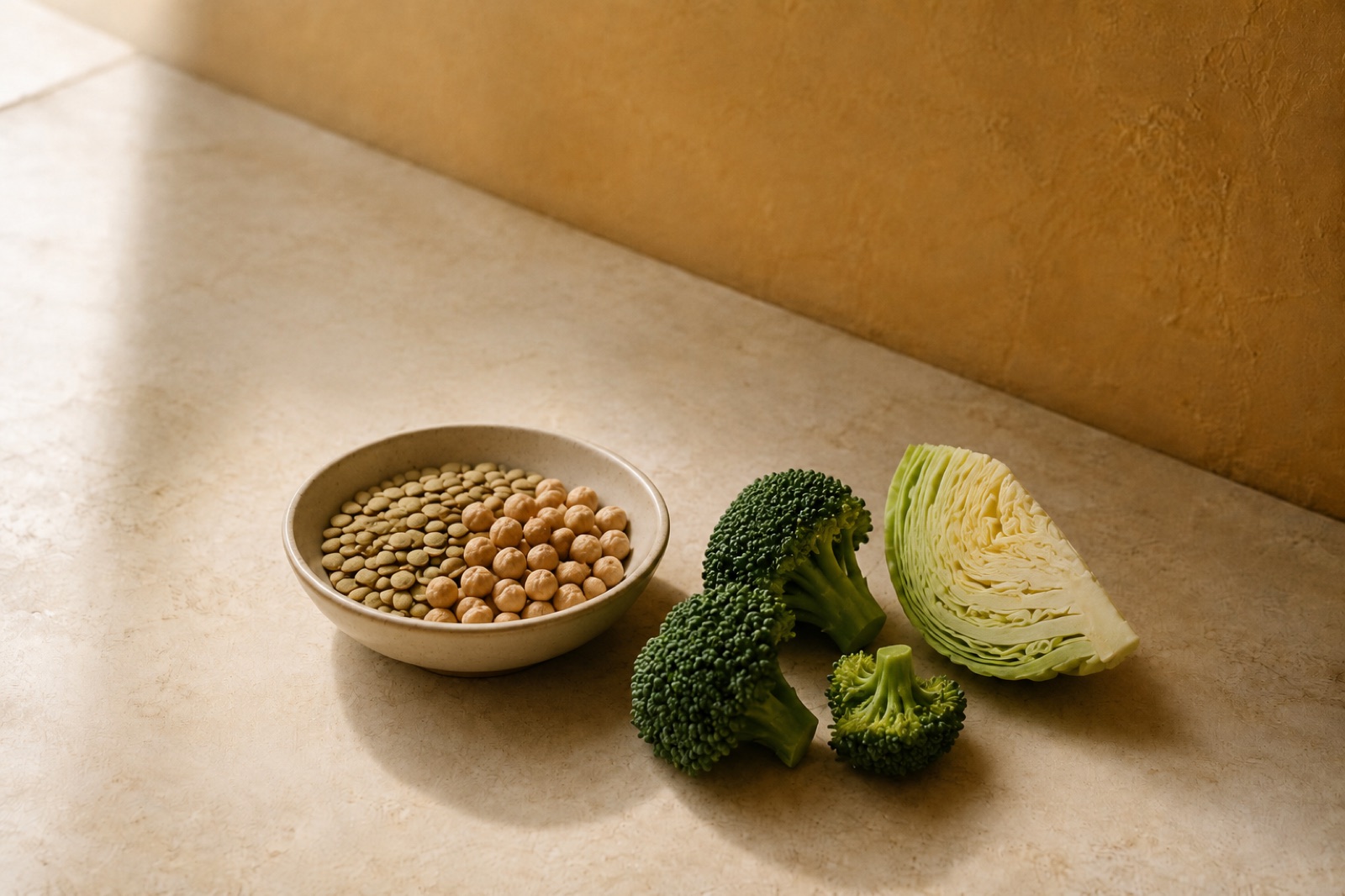
The champion gas-producers are the fermentable carbohydrates: beans and lentils, cruciferous vegetables like broccoli, cabbage, and Brussels sprouts, onions and garlic, whole grains, and — for those who lack the enzyme to digest it — the lactose in dairy. Nutritionists lump many of these under the label FODMAPs. Crucially, most are foods worth eating; the gas is the price of a fiber-rich, microbiome-friendly diet, not a reason to abandon it. If you add fiber gradually rather than overnight, as we cover in fiber is two things, the bacteria adjust and the gas tends to settle.
Why some of it smells: The sulfur story
Most gas is odorless. The memorable exceptions come from sulfur-containing compounds — produced when bacteria break down sulfur-rich foods like eggs, meat, garlic, and cruciferous vegetables. It is the same chemistry behind a foul-smelling stool, and like that smell, it is usually a report on your last meal rather than your health.
When gas is worth a mention: Company and change
Frequent gas on its own, in someone who feels well, is not a medical problem. What earns a conversation is a genuine change accompanied by other symptoms: new, persistent, excessive gas together with bloating and abdominal pain, a shift in bowel habits, unexplained weight loss, or blood in the stool. That combination can point to a food intolerance, irritable bowel syndrome, or another condition worth identifying. As the Cleveland Clinic and Healthline both note, it is the pattern and its company, not the frequency alone, that matter.
For nearly everyone, though, the honest verdict is a relief: passing gas often is normal, healthy, and usually just the sound of a well-fed gut going about its business. If you want it quieter, eat a little slower and add fiber a little more gently — but there is no need to be alarmed by a body doing exactly what it is built to do.