Why Is Your Poop Orange?
One of the least sinister colors the bowl can produce — usually the vegetable drawer talking. When orange is carrots, and when it is bile.
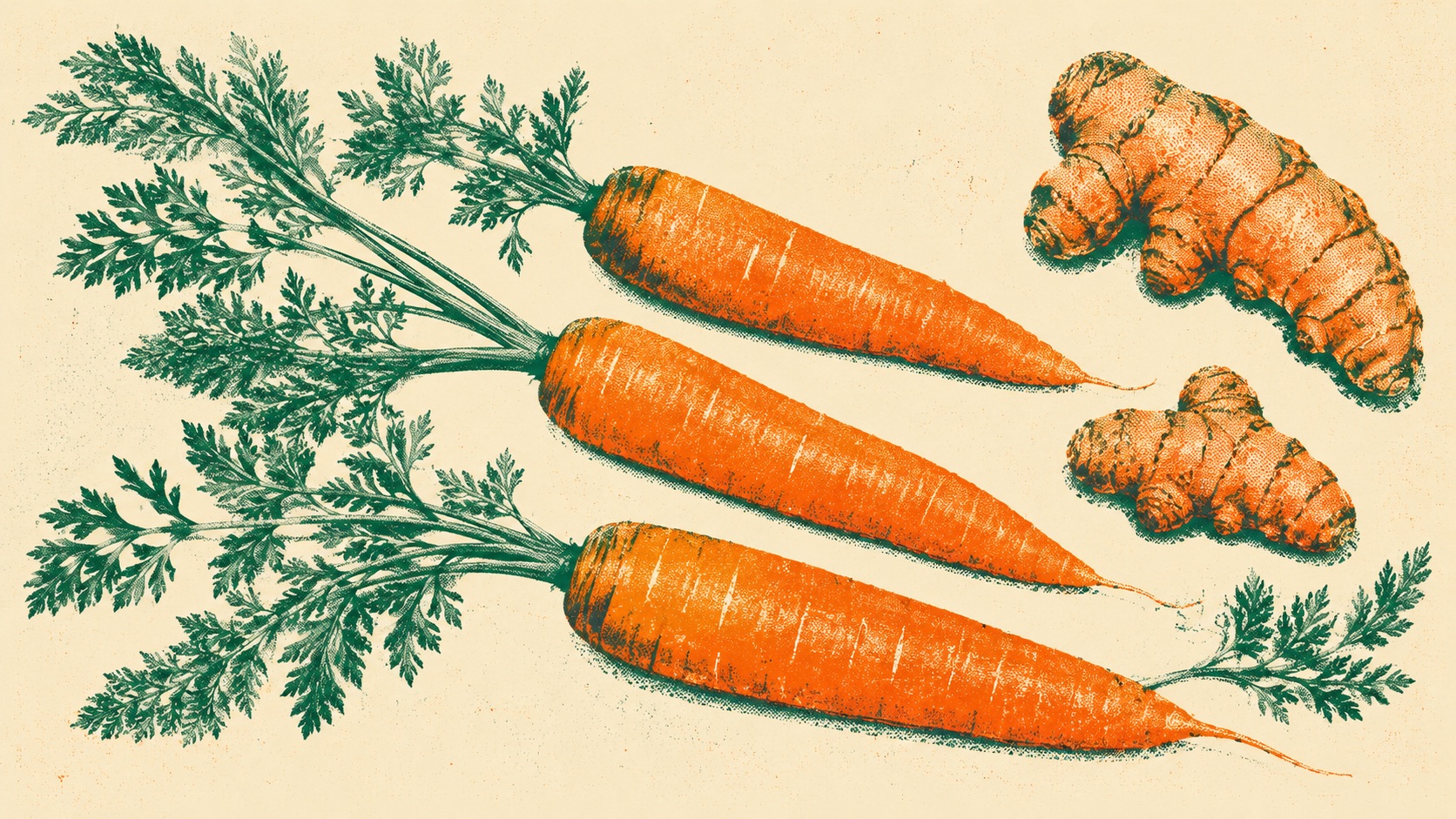
Orange stool is almost always diet — beta-carotene from carrots and sweet potatoes, or orange food dyes and some medications. Less often it signals a bile-flow issue. Persistent orange with pale stool, dark urine, or jaundice warrants a doctor.

Of all the colors the bowl can produce, orange is one of the least sinister and the most literal: more often than not, it is simply the color of what you ate, arriving more or less unedited. It sends people to the internet anyway, because orange is unexpected — but in the great majority of cases, the explanation is sitting in the vegetable drawer.
Usually, it is beta-carotene: You are what you eat, quite visibly
The most common cause of orange stool is a pigment called beta-carotene — the same compound that makes carrots orange. Eat a lot of carrots, sweet potatoes, squash, pumpkin, apricots, or anything heavily tinted with orange or yellow food coloring, and some of that pigment passes right through, tinting the result. It is the same phenomenon that turns stool green after a big serving of leafy vegetables: a dietary pigment outrunning the gut’s ability to fully process it. Harmless, temporary, and a fair sign you got your vegetables.
Orange is usually the vegetable drawer talking — beta-carotene passing straight through.
The other dietary culprits: Dyes and a few medicines
Beyond beta-carotene, artificial orange and yellow dyes — in sodas, snacks, and candies — do the same job. So do a handful of medications and supplements, including certain antacids and some vitamins. As with food, this kind of orange tracks a clear source, shows up within a day, and clears once the source is gone.
When color signals bile, not carrots: The less common explanation
There is a second, less frequent route to orange, and it involves bile. The brown of a healthy stool comes from bile pigments; when too little bile reaches the gut, or stool moves through too fast for the color to develop, the result can look pale, yellow, or orange rather than brown. If orange stool is persistent and comes alongside the signs of a bile-flow problem — pale or clay-colored stool, dark urine, or yellowing of the skin or eyes — the color is pointing at the liver, gallbladder, or bile ducts rather than the pantry, and that warrants attention.
When to have it checked: Persistence and company
A day of orange after a carrot-heavy meal is not a medical event. Raise it with a clinician if orange stool persists for more than a week or two with no dietary explanation, or if it arrives with pale stool, dark urine, jaundice, ongoing abdominal pain, or unexplained weight loss. For the full map of what each shade means, see what your stool color really means. Sources for this piece include the Cleveland Clinic and HealthCentral.
For nearly everyone, though, the verdict is the easy one: orange is the color of a diet rich in orange things. Notice what you ate, give it a day, and watch not the single surprise but the lasting pattern — because with color, it is persistence, and the symptoms it keeps company with, that carry the real information.