Pale or Clay-Colored Stool
Of all the colors, this is the one never to shrug off: pale stool can mean bile is not reaching your gut.
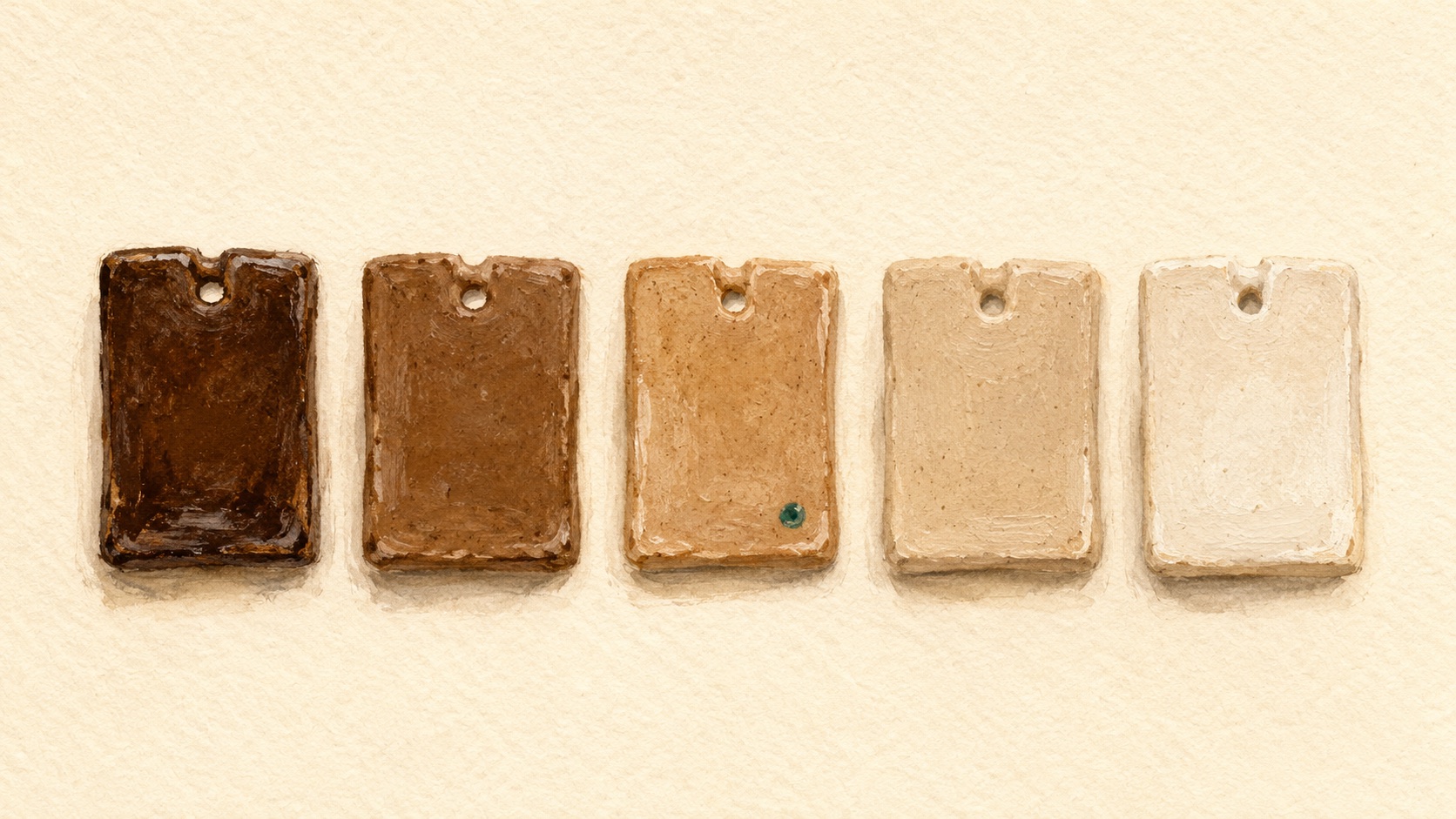
Pale or clay-colored stool can indicate that bile is not reaching the intestine, often from a problem in the liver, gallbladder, or bile ducts. If it lasts more than a day or two, see a doctor promptly.
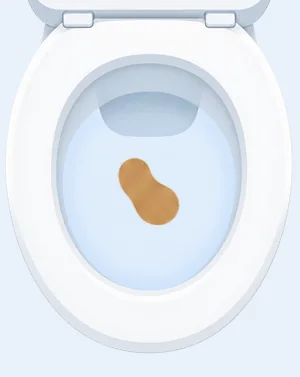
Of all the colors a stool can turn, pale is the one to take most seriously — and, paradoxically, the one that alarms people least, because it arrives quietly and rarely hurts. A gray, putty, or clay-colored stool does not announce itself the way blood does. But where a green stool is usually a story about dinner, a pale one is almost always a story about plumbing: bile, for some reason, is not reaching the gut.
Understanding why means understanding what bile does, and what its absence looks like on the way out.
The missing ingredient: Brown is bile; pale is its absence
Brown, as it turns out, is borrowed. A stool gets its ordinary color from bile — the greenish-brown fluid the liver makes to digest fat — and from the pigments that bile carries, which gut bacteria work into the familiar brown. Take the bile away, and there is nothing to color the result. What remains shows up pale, gray, or the color of wet clay. As Cleveland Clinic puts it, clay-colored stool is essentially a stool that never received its bile.
That is why pale stool is a structural signal rather than a dietary one. It is not something you ate; it is something not arriving. And the reasons bile fails to arrive nearly all live in the same small stretch of anatomy — the liver, the gallbladder, and the ducts that connect them to the gut.
Where a green stool is a story about dinner, a pale one is almost always a story about plumbing.
Taiwan screens every newborn for pale stool — with a colour card. Parents match the nappy against a printed card at the one-month check. In the pilot, across 78,184 infants, the card caught biliary atresia with 89.7% sensitivity and 99.9% specificity (Chen et al., Pediatrics 2006); once the programme went national, sensitivity before 60 days reached 97.1% (Hsiao et al., Hepatology 2008). Stool colour is a clinical signal, not folklore.
Jaundice is the companion doctors weigh most. In a UK primary-care study of 3,635 pancreatic-cancer cases against 16,459 controls, jaundice in patients over 60 was the only single symptom with a positive predictive value above 1% (it was 22%); diarrhoea, constipation and the rest were all under 1% on their own (Stapley et al., Br J Cancer 2012). Pale stool by itself is a question; pale stool with yellow eyes is the answer.
Where the bile gets blocked: The liver, the ducts, and the gallbladder
The most common explanation is a blocked bile duct. A gallstone can lodge in the duct and dam the flow; so, less often, can a stricture — a narrowing — or a tumor pressing from the duct, the pancreas, or nearby. Inflammation of the ducts, called cholangitis, can do it too. In each case the bile is being made but cannot get where it is going, and the pale stool is the visible end of that traffic jam.
The other broad category is the liver itself. If the liver is inflamed or damaged — by hepatitis, for instance — it may not produce or release bile normally in the first place. MedlinePlus groups these together for a reason: whether the problem is production or delivery, the stool tells the same pale story, and the underlying causes are ones a doctor needs to sort out.
The company it keeps: Yellow skin and dark urine
Pale stool rarely travels alone, and its companions are part of what makes it worth acting on quickly. When bile backs up, the pigment it carries — bilirubin — has to go somewhere, and it spills into the blood. That surplus turns the whites of the eyes and the skin yellow, the sign called jaundice, and darkens the urine to the color of tea or cola. The trio — pale stool, dark urine, yellow skin — is the body describing the same blockage from three directions at once.
If you see that combination, it is not a wait-and-see situation. It is a same-week, arguably same-day, conversation with a clinician.
The benign exceptions: When pale is not an alarm
A few harmless causes exist, and they are worth knowing so the concern stays proportionate. A barium swallow or enema — the chalky contrast used for some imaging — can whiten stool for a day or two afterward, entirely expectedly. Very large doses of certain anti-diarrheal or antacid medicines can lighten it as well. These are the exceptions that prove the rule: if there is an obvious, recent explanation and you feel well, a single pale stool is likely nothing. Absent that, pale is a color to respect.
What to do: Do not wait it out
The guidance here is refreshingly simple, because the stakes make it so. A single pale stool with an obvious cause can be watched. Pale stool that lasts more than a day or two, that keeps returning, or that arrives with jaundice, dark urine, abdominal pain, or itching should be seen promptly — even, and especially, when there is no pain at all. Painlessness is not reassurance here; some of the causes that block bile are precisely the ones that do not hurt early.
It helps to remember what the brown was in the first place: proof that bile made its trip. When the color drains out of the picture, the bile did not arrive, and the only useful question is why. That is a question worth asking early — and one only a doctor, not a color chart, can answer. For how pale fits among the other colors, our full color guide lays out the map; for the other urgent color, see blood in the stool; and for the shape signals that accompany it, the Bristol scale.